Page: http://www.ameriblues.com/
Showing posts with label bluesnews. Show all posts

Brian Setzer's Don't Mess With A Big Band, CD Review - by J. Blake

(New York, NY)

Brian Setzer has never been considered a “blues guitarist”, but as one of the most respected and revered players to ever pickup the instrument, he has always attacked the guitar with the passion and intensity of a bluesman and the virtuosity of a jazz player. His skill is arguably unparalleled in the world of “rock music” and he has done for both rockabilly and big band jazz, what the British players did for the blues in the 1960s.

His latest live release, The Brian Setzer Orchestra’s, aptly titled, DON’T MESS WITH A BIG BAND (2CD set) highlights many of the guitar-slinger’s biggest career hits and, as usual, some astounding musicianship. Disc 1 pulls almost entirely from his big band catalogue; with the exception of fun versions of the “Batman Theme” (for the 1960s ABC television series) and Eddie Cochran’s “Summertime Blues”. Definite highlights here include the always breathtaking “Sleepwalk” (from 1998’s THE DIRTY BOOGIE) and Setzer’s unconventional take on Nikolai Rimsky-Korsakov’s “Flight of the Bumblebee”; a guitar tour de force titled “Honey Man” from 2007’s WOLFGANG’S BIG NIGHT OUT.

Disc 2 finds Setzer looking back to his days with The Stray Cats, as he tackles the bulk of their biggest hits with more recent big band swing arrangements. Crowd pleasers like “Stray Cat Strut”, “Rumble in Brighton” and “Rock This Town” sound huge here, recorded live with the 18-piece orchestra. The disc closes with Setzer and company blowing the roof off of the joint with a booming big band encore of Stevie Ray Vaughan’s “The House Is Rockin’”.

DON’T MESS WITH A BIG BAND is a sizzling live of album from one of America’s greatest guitar heroes. Its only real noticeable flaw is that it doesn’t quite live up to the precedent set by The Brian Setzer Orchestra’s 2004 live effort, THE ULTIMATE COLLECTION.

It may not be “blues”, but with 19 tracks of pedal to the metal, “no-holds-barred” rockabilly/swing…is it really that far off?


If you enjoyed this article, you may also enjoy: Jimmy Vaughan Live in NYC

Thanks and keep reading American Blues News and also check out Media Wah Wah for more of this writer’s thoughts and opinions about Movies, Music, TV & More.

NYC blues fans, make sure you check out Al Green live at B.B. King's Blues Club and Grill on September 2nd and Jerry Lee Lewis on the 13th!!!

Copyright © 2010 - J. Blake. All Rights Reserved

"Mississippi" Fred McDowell's Come And Found You Gone, CD Review - by J. Blake


(New York, NY)

Devil Down Records boldly throws their hat into the distribution ring with a great debut release; a previously unheard collection of “Mississippi” Fred McDowell recordings titled COME AND FOUND GONE: THE BILL FERRIS RECORDINGS.

Taken from the official press release:

“This release, the first from Devil Down Records, provides never before heard recordings of McDowell, and also include his wife Annie Mae, friend Napoleon Strickland (a legendary blues harmonica and fife player in his own right), and another unidentified musician. These recordings are different from any other of Fred McDowell due to their very nature: rather than conducted with the production of a record in mind, the recordings were made casually over the course of a night. McDowell is here heard at his best, relaxed and energetic, performing many of his most famous songs as well as songs never before heard. With the his foot tapping on the hardwood floor and laughter in the background, COME AND FOUND GONE brings the listener into that host night in August, 1967, immersing them in the world of the blues house party, and guiding them through the night as it unfolded.”

Given the circumstances of the recording, the sound quality is surprisingly good. Aside from the occasional bit of mic noise, one would never guess that these intimate performances were never intended for official release. McDowell and company are in fine form, serving up a collection of fantastic acoustic blues; with a raw and often fun energy that simply will never be duplicated. These are fascinating recordings that beautifully capture a moment in time.

In addition to 16 musical performances listeners are treated to an entertaining bit of banter between the musicians and a worthwhile audio interview with Dr. William Ferris; the world renowned blues scholar that is responsible for these recordings. The CD also features gorgeous packaging, wonderful photographs and informative liner notes from Dr. Ferris, Luther Dickinson (of the North Mississippi Allstars) and distinguished French blues scholar Vincent Joos.

This is a great first effort from Devil Down Records. If they put this kind of effort into their future releases, blues fans will have a lot to look forward to.

If you enjoyed this article, you may also enjoy: Geoff Muldaur's TEXAS SHEIKS

Thanks and keep reading American Blues News and also check out Media Wah Wah for more of this writer’s thoughts and opinions about Movies, Music, TV & More.

NYC blues fans, make sure you check out Al Green live at B.B. King's Blues Club and Grill on September 2nd!!!

Copyright © 2010 - J. Blake. All Rights Reserved

Derek Truck's Roadsongs, CD Review - by J. Blake


(New York, NY)

I recently observed an interesting thing while attending Fathom Event’s “one-night-only” screening of Eric Clapton’s 2010 Crossroads Guitar Festival. Of all the magnificent talented featured in the “film”, the only one to elicit applause was Derek Trucks (and his band). Watching a concert in a movie theater is an odd experience. It is like being there, but at the same time it is far from it. On July 27th, 2010 an NYC audience sat quietly, watching a 2hour+ HD presentation that included a whole lot of blues and even more guitar. Proper movie theater etiquette was being observed until the Derek Trucks-Susan Tedeschi Band took the stage (with guests that included Warren Haynes). It was only then that the audience, collectively, forgot where they were and lost themselves in the music. It was actually an amazing thing to witness and I’m pleased to say that The Derek Trucks Band’s latest CD captures at least some of that magic and energy.

ROADSONGS marks The Derek Trucks Band’s first live album since 2004’s LIVE AT GEORGIE THEATRE and is by far, Trucks’ most sonically satisfying live recording to date. The slide-guitar virtuoso and his group of talented collaborators are in fine form here, delivering 14 tracks (on 2 discs) that span the entirety of his career; with a definite bias toward 2009’s Grammy-winning ALREADY FREE.

Recorded over two nights at Chicago’s Park West, ROADSONGS exhibits the band’s proclivity for brilliant dynamics and their amazing ability to straddle the line between complete control and raw, spontaneous live energy; things that are never more present than on the album’s 14 and a half minute version of "Afro Blue" and its 13 minute (blues turned funk) medley of "Get Out My Life Woman/Who Knows”. Other highlights include the blues standard “Key to the Highway”, covers of Bob Dylan’s "Down in the Flood", Bob Marley’s "Rastaman Chant" and Eric Clapton’s "Anyday" as well bluesy DTB originals "Get What You Deserve" and "Don’t Miss Me".

Derek Trucks continues to shine as a compelling live performer and as a (somewhat) recently crowned “Guitar God”. His specific way of melding blues, jazz, rock and soul creates a sound that is uniquely his and ROADSONGS captures it and his (and his band’s) talent beautifully. This particular lineup of the band may be currently on hiatus as Trucks tours North America with his wife Susan Tedeschi, but this latest live release gives us something exciting to cherish until the DTB is touring again.

If you enjoyed this article, you may also enjoy: ALREADY FREE CD Review

Thanks and keep reading American Blues News and also check out Media Wah Wah for more of this writer’s thoughts and opinions about Movies, Music, TV & More.

NYC blues fans, make sure you check out Al Green live at B.B. King's Blues Club and Grill on September 2nd!!!

Copyright © 2010 - J. Blake. All Rights Reserved

Bettye LaVette's Interpretations, CD Review - by J. Blake


(New York, NY)

When I first heard that Detroit soul-singer Bettye LaVette was putting out an album of British rock covers, I was a little skeptical. LaVette’s voice has never been one of my favorites and in recent years it has taken on an even more raspy quality that is just not my cup of tea. The thought of her belting out songs from Led Zeppelin to Pink Floyd seemed like a horrible idea to me, but as the album quickly climbed to number one on the Billboard Blues Charts upon its release, I have to admit I got a little curious.

I managed to get my hands on a copy of LaVette’s INTERPRETATIONS: THE BRITISH ROCK SONGBOOK over a month ago and I wish I could say that I fell in love with it the minute I slipped it into my player, but if that were the case you would’ve read a review of it weeks ago. The truth is I wasn’t thrilled with it upon my first listen. I was willing to give her credit for rearranging an amazing collection of British rock standards and making them her own, but it wasn’t a vibe I was feeling at the time and seeing how it was not really a “blues album”, I didn’t really feel that it was worth shining the American Blues News spotlight on; especially in a negative way.

With that said it has now had time to settle and I’ve gone back and given it a few more listens; not because I felt I should, but because I wanted to. So I’m here to confess that INTERPRETATIONS: THE BRITISH ROCK SONGBOOK has grown on me. It is still not a blues album, why it is on the blues charts I’m not sure, but it is often an emotionally moving meditation on the words and melodies of some of the finest songwriters of the 2nd half of the 20th century.

At age 64, LaVette brings a soulful feminine maturity to tracks like “Isn’t It A Pity” (Harrison), “Wish You Were Here” (Gilmour/Waters), “Maybe I’m Amazed” (McCartney), “Salt Of The Earth” (Jagger/Richards), “Don’t Let The Sun Go Down On Me” (John/Taupin) and “Love Reign O’Er Me (Townshend); giving a new emotional weight to material that was originally written by British white guys in their 20s.

On the other end of the spectrum, slightly more upbeat material like “The Word” (Lennon/McCartney) and “Why Does Love Got To Be Sad?” (Clapton/Whitlock) get the funk treatment as “All Of My Love” (Jones/Plant”) takes on a more traditional Detroit soul attitude. But perhaps the biggest surprise is that the album’s highlight comes in the form of a Ringo Starr composition! “It Don’t Come Easy” is redefined with a slow and bluesy slide-driven groove that leaves you longing for more.

With LaVette’s aptly titled exploration into the British rock songbook, the key word really is “interpretation”. Even though every new arrangement may not be a gem, the fact that she successfully managed to make such well-defined material truly her own, is more than commendable. It may prove to be an acquired taste, but with a little time and patience, I believe that most music fans will find INTERPRETATIONS: THE BRITISH ROCK SONGBOOK to be a rewarding listening experience.

If you enjoyed this article, you may also enjoy: Beck & Clapton Rock NYC!!!

Thanks and keep reading American Blues News and also check out Media Wah Wah for more of this writer’s thoughts and opinions about Movies, Music, TV & More.

NYC blues fans, make sure you check out Jack Bruce & Joey Molland live at B.B. King's Blues Club and Grill on August 10th and John Mayall on the 13th!!!

Copyright © 2010 - J. Blake. All Rights Reserved

Robert Cray's Cookin' In Mobile, CD/DVD Review - by J. Blake


(New York, NY)

Recorded and filmed at Alabama’s Saenger Theatre in early 2010, the 2-disc set titled COOKIN’ IN MOBILE marks both Robert Cray’s forth live album since 2006 and the first performance video of his career. With this latest release celebrating Cray’s 30th anniversary as a recording artist, his fans will revel in exciting performances of past classics like “Right Next Door” and “Smoking Gun” as well as current favorites from 2009’s studio effort THIS TIME, such as “Chicken In The Kitchen”, “I Can’t Fail”, “Love 2009” and “That’s What Keeps Me Rockin’”.

Like all great blues artists, Cray has developed a sound that is undeniably his own. It may not cater to those critics looking for “edge”, but his custom blend of blues, soul, rock and gospel has helped make him (arguably) America’s most successful contemporary blues singer/guitarist. COOKIN’ IN MOBILE may not bring anything new to the table, but it marks a milestone in Cray’s ongoing journey as a bluesman and documents where he is today as a live performing artist; and with 2008’s LIVE AT THE BBC (recorded in 1988 and 1991) and AUTHORIZED BOOTLEG: AUSTIN TEXAS 5/25/87 (released earlier this year) we can now track his evolution as a stage performer for the first time.

Ultimately COOKIN’ IN MOBILE captures Robert Cray doing everything that he is known for. His voice is in fine form and his guitar-playing (though not my particular taste) is as twangy, disjointed and heartfelt as ever. The band is tight and their energy is fun. If you’re a fan of Cray’s past work, you will undoubtedly be satisfied with this latest live CD/DVD release…and at $13, it is a great value.

Highlights include the laid back cover of Howlin’ Wolf’s “Sitting On Top Of The World”, the driving instrumental outro on “Chicken In The Kitchen” and the (DVD only) performance of Cray’s classic “Phone Booth”.

If you enjoyed this article, you may also enjoy: Robert Cray’s This Time

Thanks and keep reading American Blues News and also check out Media Wah Wah for more of this writer’s thoughts and opinions about Movies, Music, TV & More.

NYC blues fans, make sure you check out Jack Bruce & Joey Molland live at B.B. King's Blues Club and Grill on August 10th and John Mayall on the 13th!!!

Copyright © 2010 - J. Blake. All Rights Reserved
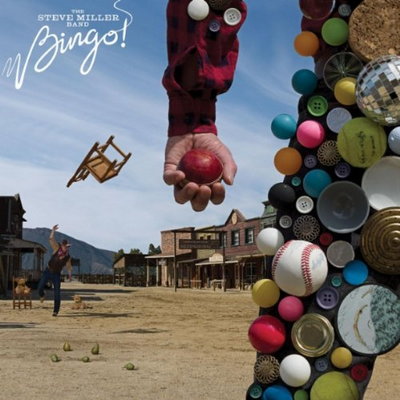
The Steve Miller Band's Bingo!, CD Review - by J. Blake


(New York, NY)

This summer Steve Miller delivered his first studio effort in 17 years and with it he has decided to pay tribute to his blues and R&B roots. BINGO! may feature compositions from such notable blues greats as B.B. King, Lowell Fulson, Otis Rush, Howlin’ Wolf, Earl King, Jimmy Reed and Jimmy Vaughan, but it is far from a copycat blues-tribute. From signature harmonies and guitar-style to production quality, BINGO! feels and sounds very much like a “Steve Miller” album.

Look, is he attempting to redesign the wheel here? No not at all. In fact I’d go as far as to say he’s not even really challenging himself too much musically, but with the help of artists like Joe Satriani, Sonny Charles, Kenny Lee Lewis and (the now late) Norton Buffalo, Miller has put his own recognizable musical stamp on a collection of familiar blues standards and contemporary blues covers; miraculously making often recycled material feel fresh and at times even new. Tracks like Hey Yeah, Who’s Been Talkin’, Rock Me Baby (featuring Joe Satriani), Come On (Let The Good Times Roll) and All Your Love (I Miss Loving) sizzle with shades of Hendrix and Stevie Ray, without ever crossing over into rip-off territory. .

Ultimately, BINGO! is a solid piece of contemporary blues that highlights Miller’s guitar chops and shows off his prowess as an arranger and producer. Though his rock sensibilities may boil to the surface at times, they never become overpowering or get in the way of the album’s apparent goal…to deliver a collection of fun, toe-tapping, head-bobbing blues. It’s definitely worth checking out.

If you enjoyed this article, you may also enjoy: Al Kooper Live & Kickin’ At 66

Thanks and keep reading American Blues News and also check out Media Wah Wah for more of this writer’s thoughts and opinions about Movies, Music, TV & More.

NYC blues fans, make sure you check out Jack Bruce & Joey Molland live at B.B. King's Blues Club and Grill on August 10th and John Mayall on the 13th!!!

Copyright © 2010 - J. Blake. All Rights Reserved

A Blues Salute To Black Sabbath - by J. Blake


(New York, NY)

“Black Sabbath’s major contribution has been to successfully capture the gist of specifically seventies culture through their music. They relate to this impersonal, mechanical decade much as Delta bluesman and their Chicago spin-offs related to their eras; by synthesizing collective feelings and giving their contemporaries hope by revealing the disaffection that unites all of them. In that remote but real sense, Black Sabbath might well be considered true seventies bluesmen.” –Gordon Fletcher, “The Sabbath Search For Peace,” Rolling Stone Magazine, 14 February 1974, p55.

The above quote is something that I read a long time ago and it has always stuck with me. It expresses a notion that ultimately questions the definition of blues; something I’ve been thinking a lot about lately. Obviously very few, if any, would accept the idea that Black Sabbath was a blues band for their time, but let’s, just for moment, think outside the box and consider the notion.

Putting aside the fact that Black Sabbath started their careers as a pretty straight forward British blues band, their greatest accomplishment was that they became the first true heavy metal band and in actuality heavy metal (in general) and the blues are very similar. They may not be working entirely off of the same musical conventions, but thematically they share much more than most people realize.

An excerpt from Robert Johnson’s Me and the Devil Blues:

Early this morning, you knocked upon my door.
Early this morning, ooh you knocked upon my door.
And I said, “Hello, Satan, I believe it’s time to go.”
Me and the Devil, were walkin’ side by side.

An excerpt from Black Sabbath’s title track:

What is this that stands before me?
Figure in black which points at me.
Turn around quick and start to run,
Find out I’m the chosen one.
Oh No!
Big Black shape with eyes of fire,
Telling people their desire.
Satan’s sitting there, he’s smiling.
Watches those flames get higher and higher.

Though Satan and the occult are usually considered to be things strictly associated with heavy metal, the Devil has actually played a character in recorded music since the blues began making its way on to acetate. Throughout the 1920s and 30s, Sam Collins, Charlie Patton, Robert Johnson, Skip James, Lonnie Johnson and many others, all recorded songs that involved Satan. Some scholars even believe the name “blues” is actually derived from term “blue devils”, meaning melancholy and sadness (Wiki).

The Devil as a character, or used as imagery, is an element of blues music that seemed to die out after World War II, as the genre became electrified and made its way to more metropolitan areas. Though the Devil would rear his head sporadically throughout subsequent decades, in songs like The Rolling Stones’ Sympathy for the Devil; it wasn’t until Black Sabbath and the creation of heavy metal that the character would be given the full spotlight once again.

To explore the relationship between heavy metal and the blues further, let’s ask ourselves “what exactly is blues music?” It is/was music created by the lower-class in an effort to express their plight. They took a look around them and wrote about what they saw. They wrote about their lifestyles, about their relationships and about their fears. Yes the blues can sometimes be fun, upbeat and even comical, but it is normally characterized as being brooding and sad. In essence, blues artists have always written about what they know; they have always written from the heart and most importantly, they have always attempted to express the “not-so-pretty” truth that many artists seem to be avoiding.

Heavy metal (and specifically Black Sabbath) has always shared these same ideals and has always set out to accomplish the same goals. The members of Black Sabbath were working-class kids from a steel town in England. Their guitarist Tony Iommi lost the tips of two of his fingers (on his fret hand) in a factory machine accident and even after the band began to gain popularity on the club circuit, their front-man Ozzy Osbourne couldn’t afford to own a pair of shoes. These were guys that had ‘the blues’!

It was 1969/70 and as many music artists were experiencing the summer of love in America and bands like The Beatles were preaching love and peace, the members of Black Sabbath looked around at their poor dreary surroundings; they read about the horrors of the Vietnam War and said “why isn’t anybody writing about this?” So they set out to write about the darker side of life. As some artists wrote about God and the euphoria of mind-altering drugs, Sabbath wrote morality tales about the Devil and the dangers of losing yourself to ‘the needle’. They wrote about the horrors of war and the fear of atomic destruction. Like the bluesman that came before them, Black Sabbath wrote about what they knew and expressed the (just plain) ugly truth that surrounded them. They observed a menacing and harsh reality and they needed a sound that would do it justice; and unfortunately a 12-bar shuffle wasn’t going to cut it…and thus, heavy metal was born.

Whether it is the fact that (like blues) Black Sabbath’s music stereotypically doesn’t contain traditional chorus/bridge song structures, or that guitarist Tony Iommi’s lead-work is all derived from pretty standard blues and jazz scales, or that rhythmically songs like Wicked World and Fairies Wear Boots are actually utilizing elements of swing, or even that the lyrics of N.I.B. weave a very blues-like tale about unrequited love (albeit from the Devil’s perspective), the similarities between the music of Black Sabbath and the blues are almost endless. We could certainly go through each album/song and continue to make the case that Black Sabbath is a blues band, but really what would be the point?

At the end of the day, like beauty, the blues is in the eye of the beholder. What I do ask is, with Black Sabbath’s first two albums (BLACK SABBATH and PARANOID) celebrating their 40th anniversaries this year, let’s put aside our music prejudices and give a big blues salute to four guys from Birmingham England, that not only invented a (still thriving) style of music and helped shape guitar-driven rock forever, but most importantly told the truth as they saw it…no matter how ugly it may have seemed.

If you enjoyed this article, you may also enjoy: Meantooth Grin

Thanks and keep reading American Blues News and also check out Media Wah Wah for more of this writer's opinions about Movie, Music and TV.

NYC blues fans, make sure you check out Jack Bruce & Joey Molland live at B.B. King's Blues Club and Grill on August 10th and John Mayall on the 13th!!!

Copyright © 2010 - J. Blake. All Rights Reserved


Blues CDs To Look For - by J. Blake

(New York, NY)

CDs have been pouring into the American Blues News offices and some of them definitely deserve an honorable mention.

Singer/guitarist Marshall Ruffin serves up a 5 track CD (and Independent Music Awards Nominee) on Jammates Records called MORNING GLORY. Ruffin’s promotional material accurately describes the album as "soulful blues meets stimulating grunge". Ruffin’s style may not appeal to blues purists, but he is taking the 'feel' of the blues and making it his own. With a thick and crunchy fuzz tone, slightly redundant grooves and sometimes experimental attack on guitar-leads, MORNING GLORY will not be everyone’s cup of tea, but fans craving something new and interesting, may find that this is exactly what they have been looking for…think a younger, more contemporary take on a Tom Waits-esque attitude.


The good people at Jammates Records are also responsible for BACK ON MY GOOD FOOT by Rick Fowler; a fun, riff-driven blues-rock album that embodies the term 'cliché' in the best way possible. With this 2008 studio effort, Fowler delivers a sensibility that is more akin to the blues-rock of the 80s and 90s than anything from the past decade. Poetically, he’s no Shakespeare, but his lyrics often project the type of fun over-the-top 'kitschiness' that made George Thorogood a star. Guitar-wise, Fowler has a great tone and the chops to back it up. BACK ON MY GOOD FOOT is not artistically pushing the envelope and contains nothing blues-rock fans haven’t heard before, but it appears to know exactly what it wants to be and unapologetically goes for it. You’ve got to respect that.


On a more traditional front, Rick Taylor’s LUCKY ROOM (Volunteer Records) and Nasty Ned’s ROOTS 52 (American Showplace Music) each deliver a beautifully authentic take on both acoustic and electric blues.

With LUCKY ROOM, Rick Taylor shows off his musical prowess as he tackles a (somewhat) lesser known collection of blues covers with nothing more than his voice, his six strings, his harmonica and an unorthodox percussionist (Hensall "Washboard" Fats). LUCKY ROOM is a wonderfully executed album of stripped down blues that is sure to satisfy any fan that just can’t get enough of traditional blues formulas.


Nasty Ned’s 2010 studio effort is another album that exudes that "if it ain’t broke, don’t fix it" attitude. ROOTS 52 is comprised of Chess-style originals and familiar Muddy Waters classics. Nasty Ned’s thick Muddy-esque voice lends itself to the material in a way that many contemporary blues artists should envy. His harmonica playing-style is simple, but effective and his band (most notably guitarist Michael Krizan) is exceptional. Lovers of 50s-style/shoutin’ blues are sure to be satisfied with ROOTS 52.


If you enjoyed this article, you may also enjoy: Ten Foot Ploe Cats CD Review

Thanks and keep reading American Blues News!!!

NYC blues fans, make sure you check out Jack Bruce & Joey Molland live at B.B. King's Blues Club and Grill on August 10th and John Mayall on the 13th!!!

Copyright © 2010 - J. Blake. All Rights Reserved


Leslie West And Corky Laing In NYC - by J. Blake


(New York, NY)

Whether it is his personality, his legacy as a pioneer of early heavy-metal, his guitar playing, the blues-inspired rock riffs he has written, his singing voice, his appearances as a semi-regular guest on the Howard Stern Show, his wedding on the stage of Woodstock’s 40th anniversary concert or even his physical stature, there are few things about Leslie West that are not larger than life. Even the name of his band, Mountain, implies enormity.

Last week, Leslie West brought his ‘larger than life’ musical presence to New York City as he took the stage on two consecutive nights at B.B. King’s Blues Club & Grill in Time Square. Both West and drummer Corky Laing took a stroll down memory lane as they revisited two different incarnations of their past musical careers. On Wednesday June 30th, 2010, the festivities began with the current line-up of Mountain blowing the doors off of the venue with their signature brand of heavy blues-rock. From the very first notes played, the audience was sonically assaulted with (possibly) the most ‘badass’ blues-guitar riffs ever written, as the band launched into the now classic “Never In My Life”.

The set continued with other Mountain hits that included “Nantucket Sleigh Ride”, “Blood Of The Sun” and solo acoustic versions of “For Yasgur’s Farm” and “Long Red”. Aside from the typical Mountain-fare, one of the evening’s definite highlights came in the form of a touching solo acoustic performance of a song called “The Cell”; from West’s 2005 album (unfortunately) titled GUITARDED. According to West, the lyrics were sent to him in the form of a poem from a prison inmate who accidentally committed murder during a robbery. The poem was written as an apology addressed to the inmate’s mother, for committing the crimes. At the inmate’s request, West put the words to music and that night, his delivery of the song was both passionate and moving.

The set closed with Corky Laing and Mountain’s current bassist, the energetic Rev Jones (whose main piece of stage performance shtick consists of him swinging his head in a circular motion, causing long braids on the top of his head to twirl around like propellers on a helicopter) once again taking the stage with West and hammering out thunderous electrified rock and roll.


After a brief intermission, West and Laing returned to the stage with Jack Bruce’s son Malcolm on bass. With Malcolm filling in for his father, the trio ran through the bulk (if not all) of (the 70s super-group) West, Bruce and Laing’s most notable material; including “Why Dontcha”, “The Doctor”, “Love Is Worth The Blues” and “Play With Fire” as well as recognizable hits like Cream’s “Politician” and “Crossroads” and Mountain’s (Jack Bruce-penned) “Theme From An Imaginary Western”. Despite the fact that Malcolm Bruce seemed slightly out of his element, the trio delivered a set a music that was certainly on par with, if not better than the one that preceded it.

The evening came to a close with both Rev Jones and Malcolm Bruce playing bass on a hard-rocking (and crowd pleasing) encore of Leslie West’s most famous composition, “Mississippi Queen”.

Despite West’s frequent need to rest on a stool while playing, he continues to prove why he is considered by many to be one of rock’s most underrated guitarists. His tone is ferocious and his voice is arguably better now than it was 20 years ago. Corky Laing is also still in fine form and remains one of rock’s most entertaining drummers to watch. Both Rev Jones and Malcolm Bruce bring an element of contemporary youthfulness to material originally recorded 35-40 years ago and each, in their own way, displays a unique virtuosity on their instrument; making for an interesting juxtaposition when seen and heard side by side, like it was last week.

All in all, it was a fantastic night of music and performances by either line-up are recommended to guitar-junkies, early-metal heads, late-60s rock lovers and fans of the ‘power trio’ sound.


If you enjoyed this article, you may also enjoy: Electric Chubbyland Concert Review

Thanks and keep reading American Blues News!!!

NYC blues fans, make sure you check out Jack Bruce & Joey Molland live at B.B. King's Blues Club and Grill on August 10th and John Mayall on the 13th!!!

Copyright © 2010 - J. Blake. All Rights Reserved
*Photos: Copyright © 2010 - Nelson G. Onofre. All Rights Reserved.

The Future Of The Blues, Another Opinion - by J. Blake

(New York, NY)

A lot has been written lately regarding the “future of the blues”. The Wall Street Journal recently published an article titled “Lamenting the Future of the Blues” where writer Jim Fusilli basically spelled out how the genre is “like an endangered species” (and that was a quote from Buddy Guy). In response to the controversial article, legions of blues supporters took their keyboards (including our very own Robert “Nighthawk” Tooms) to explain why the genre is still “alive and well” and why guys like Fusilli don’t know what they are talking about.

I’m here to say that it is my opinion, that the truth about the future of the blues lies somewhere in the middle. In all honesty it was just a few weeks ago that I emailed our fearless leader Monica with a message titled “Good Blues is Kinda Dead”. As one of the founding members of this writing team and the site’s leading reviewer, I get to hear a lot of new blues recordings. Whether they are mailed to me directly or I seek them out on my own, I listen to tons of “new” blues and I have to admit that very little of it is anything to get excited about…and after a year, I’m starting to find that frustrating. I realize that such a statement may cause a little controversy amongst our readers. Believe me, I am no stranger to reader comments condemning me for my views and asking things like “why is this guy reviewing blues if he doesn’t even like it?”

The fact of the matter is I do like the blues. In fact I love it and that is why I am so hard on it and its artists. I’ve been doing this for over a year and I’ve listened to well over 100 newly released blues CDs during that time. Unfortunately, I can say with all honesty, that I only need one hand to count all the CDs that genuinely excited me. Sure there were CDs that I enjoyed. This site is full of my positive reviews, but literally, only a handful of the albums I’ve listened to over the past year were truly exciting. The many of the albums I’ve heard recently span in quality from absolutely horrible to simply just listenable. Even the majority of the ones I enjoyed are formulaic and full of the same old tricks.

In his recent article, our very own Nighthawk, stated that the “Stevie Ray Vaughan-a-be copycat syndrome passed many years ago.” I’m sorry to say that from my vantage point, that syndrome is what is actually still alive and kicking. Maybe Nighthawk is right in that “none of the winners of this year’s IBC could be described as Stevie Ray Vaughan imitators”, but that doesn’t account for the far bigger majority of artists that did not win the IBC, or all of the SRV copycats that send me CDs weekly.

The question is not can the blues survive? There will always be blues, blues artists and blues fans. The question is can it grow? Can it successfully evolve past the I-IV-V/12 bar formulas and still be considered ‘the blues’, because right now I’m sorry to say that most of what I hear, sounds like the same old crap to me and quite frankly it is not being done nearly as well as it was by past artists and it isn’t even on par with blues albums that were recorded 15 years ago.

One could argue that the biggest problem may be the lack of a definition. Everyone has a different definition for what the blues is. In response to a recent criticism I wrote regarding Joe Bonamassa’s latest album, members of a popular blues forum slammed me for implying that Bonamassa was a blues artist; stating that he is actually a ‘blues-rock’ artist and they went on to basically question my credibility for not knowing the difference. Can we please quit with all the labels and sub-categories? Is anyone really benefiting from labeling somebody as a ‘blues-rocker’ or a ‘delta-bluesman’ or a ‘folk-blues artist’ or ‘a Chicago bluesman’ or a ‘Texas bluesman’ or a ‘Memphis bluesman’ or a ‘British bluesman’…or an ‘electric bluesman’ as opposed to an ‘acoustic bluesman’; stating that “this guy is more gospel than blues” or “that guy plays rock, but it has a blues feel”? Does it really matter if the ‘blues capitol’ is Chicago or Memphis? For a style of music that did more for tearing down boundaries and unifying the masses than arguably any other, we all seem very quick to confine it and label the crap out of it.

Who is benefiting from all these labels? Certainly not the artists! How can anyone argue whether or not the blues is alive or dead, when nobody can figure out what the blues is? Lord knows I hope it is not restricted to 12 or 8-bar/I-IV-V chord progressions, because if it is, we’re all up Shit Creek without a paddle. Perhaps the biggest problem with the blues is that once it moves past the basic formulas, it isn’t considered blues anymore. Both Fusilli and Jeff Fedora (whose views are cited in Nighthawk’s recent article) point to the fans as the biggest culprits in this potential murder of the genre. Perhaps it is the fan’s lack of open-mindedness that is hurting the blues’ future. Perhaps it is only the perception of what the fans want that is the problem. Perhaps it is all of the above.

What I can say is that, for me personally, I am getting a little tired of listening to the same old stuff. Let’s face it, as great as they were artists like Honeyboy Edwards, Hubert Sumlin and even B.B. King are long past their prime. Guys like Clapton can only rejuvenate the genre so many times before we have to take the burden off of his shoulders. A guy like Derek Trucks can’t be confined to the rigid forms that the blues seems to demand and though artists like John Mayer and Jack White, may ultimately have their hearts in the right place, can we really look to them to carry the blues into the future? Yes millions of people are playing the blues and many of them are playing it well, but how many of them are making it their own and not just copying people that played it 50+ years ago? There are good artists trying to help the blues evolve, but they are few and far between and it is getting harder and harder for them to be heard…and at the end of the day, do fans want the blues to evolve or do they really just want to hear watered down versions of Muddy Waters and Holwin’ Wolf tunes and guitar players that sound more like Clapton and Stevie Ray than themselves?

The albums that I find exciting these days are from those artists that really seem to be attempting to take the blues someplace new…or at least someplace different. Bands like Meantooth Grin, Ten Foot Polecats and Moreland & Arbuckle are finding ways to give the blues a harder edge. Black Joe Lewis & The Honeybears are putting their own stamp on both soul and blues and The Crank Bros. (out of Norway) are delivering their own version of the blues with a burlesque-like sexiness. Yes I just named five recent bands that I like, but when you consider the fact that these are only five out of the hundreds I’ve heard or seen in the last year, the odds are not that good.

This week I was actually looking forward to getting my hands on copies of new blues albums from Elvin Bishop, Rick Derringer, Steve Miller and Cyndi Lauper and though none of them are horrible and I enjoyed things about all of them (and I still may review some of them for this site), none of them are particularly exciting and none of them are challenging; to the artists or the art form. I am grateful that such notable talent is trying to keep the blues alive, but how beneficial is keeping it alive if we’re not going to allow it to grow?

Thus far, this diatribe has been attacking the blues as an art and its creativity…or lack there of. Obviously when it comes to this kind of discussion, it is all a matter of opinion. Clearly, though I do listen to a lot of ‘new’ blues artists, I’m not down in the trenches seeing it live in cities like Chicago and Memphis, where it does thrive as local art form. Don’t get me wrong, I see my fair share of blues here in New York City, but the artists that come here are not necessarily the best…even if they are the ‘big names’. So my view on the subject is definitely different than a guy like Nighthawk’s, but there lies the problem…on a much more logistical and more fact-driven front.

Yes for a professional musician from Memphis, the blues must seem like a healthy thriving genre of music, but for a struggling guitarist in New York City, the future does not seem all that bright. The fact is that almost all of NYC’s blues venues closed a long time ago. The only real blues clubs that are left here are B.B. King’s Blues Club and Grill (including Lucille’s which is the free room next to the main stage) and Terra Blues. Ok, two clubs are better than none right? Well let’s add the fact that each of those venues could not be less supportive to local talent. When they are not catering, almost exclusively, to touring/signed talent, each venue only employs the same handful of ‘local’ blues artists for weekly gigs. In other words, the same few musicians play both venues weekly, while the rest of NYC’s blues artists struggle to be heard at rock clubs, playing between an indie-rock band and a punk band. How does a blues artist gain a following when they can’t even play with like-minded bands for like-minded audiences? Just a few days ago our very own Nelson put a post up on Facebook stating that NYC now has a blues jam. This may not seem like big news, but for a town (a.k.a. the biggest city in the world) where legitimately good blues jams have been scarce for years, this news is huge.

This is not coming from a musician complaining about how he couldn’t get booked in this city. When I had my blues band, we did pretty well. When it really seemed like the blues was drying up for good in NYC, I left it behind and joined an indie-rock band and now I’m doing pretty well again…as long as I’m playing, that’s all that matters to me. My point is only, if the blues is all but dead in the biggest city in the world, there has to be other areas where is it struggling as well. If an animal that once inhabited an entire continent, suddenly only lives and thrives in a few isolated areas, it would be considered an endangered species. Like it or not, the blues ‘ain’t what it used to be’.

So even though I said “the truth about the future of the blues lies somewhere in the middle”, it must seem pretty apparent that my outlook on the subject is bleak. The good news is that the future is not written in stone. The blues is alive. If it is doing well or not is a matter of opinion, but at the end of the day, it will only take one artist with one song or album to get the ‘creative ball’ rolling again.

Guys like Muddy Waters and Howlin’ Wolf electrified the blues, reviving it for their generation. The Rolling Stones, Cream, Hendrix and Led Zeppelin took the blues in a new direction, reviving it again in the late-1960s and moving it forward. The Allman Brothers Band, Johnny Winter and ZZ Top also made it their own throughout the late-1960s and 1970s. Stevie Ray Vaughan and Robert Cray did the same thing a decade later and though I was not really a fan, the 1990s brought us Johnny Lang and Kenny Wayne Sheppard breathing new life into the genre. The White Stripes and John Mayer, though drastically different from each other, attempted to do it in the 2000s.

Unfortunately, where Jack White and John Mayer failed is that they weren’t game-changers. The artists listed before them took the blues by the balls and molded it into something new, yet familiar; often even evolving as artists past what the genre had to offer, but leaving an exciting blues legacy in their wake. Now as we embark on a new decade, all the blues really needs is a single ballsy guitar riff, to spark the inspirational fire under tomorrow’s musicians. One riff that makes a kid pick up a guitar and say to themselves “I gotta figure out how to play that!” We just need to be ready for the fact that, to really thrive in the future, the blues may need to evolve into something new…something blues purists may not be too happy about.


If you enjoyed this article, you may also enjoy: Black Joe Lewis CD Review

Thanks and keep reading American Blues News!!!

NYC blues fans, make sure you check out Mountain plus West, Bruce Jr. & Laing live at B.B. King's Blues Club and Grill on June 29th and 30th!!!

Copyright © 2010 - J. Blake. All Rights Reserved

Delaney & Bonnie's On Tour With Eric Clapton Reissue!!! - by J. Blake

(New York, NY)

The year was 1969. Blind Faith, rock’s first ‘official’ super-group had formed and was reluctantly touring to promote their first (and only album). Disillusioned by the stardom that Cream and Blind Faith had bestowed upon him, guitarist Eric Clapton found exactly what he longed for in Blind Faith’s opening act; a rootsy rock ‘n’ soul group from America called Delaney & Bonnie & Friends. The enjoyment the band appeared to be having together, along with their energetic stage-presence and their ‘down home’ sound, shed light on the musical path that the British guitar-God had been searching for since Cream’s end.

Against the rest of Blind Faith’s wishes, Clapton began taking the stage nightly, with the dynamic opening act and when his ‘super-group’ met their inevitable demise in October of 1969, the guitar-slinger decided to take to the road as a sideman in Delaney and Bonnie Bramlett’s traveling musical family.

It was under the Bramletts’ tutelage that Clapton found his voice as a front-man and singer. It was his relationship with Delaney and Bonnie (and their band) that led to one of his most artistically fruitful periods; most notably his first solo album and the eventual formation of Derek and The Dominos.

Released in June of 1970, Delaney & Bonnie & Friends’ ON TOUR WITH ERIC CLAPTON was recorded live on December 7th, 1969 at Fairfield Halls in the U.K. and featured Clapton and future Dominos Bobbie Whitlock, Carl Radle and Jim Gordon as well as Leon Russell, Dave Mason and George Harrison. The album reached #29 on the Billboard album charts and has proven to be the Bramlett’s most successful recording.

Now, 40 years later, the good people at Rhino Handmade are giving ON TOUR WITH ERIC CLAPTON more than just the standard ‘deluxe’ treatment. Due out this July, the reissue will contain four discs featuring four complete concerts from December of 1969 and over three hours of unreleased performances…including Clapton singing a rare gem from his first solo album, “I Don’t Know Why”!!!

The following passage has been taken from www.rhino.com:

The set, which comes packaged in a mock road case, contains Delaney & Bonnie & Friends’ complete performance at London’s Royal Albert Hall, plus a composite of the next night’s performances at Colston Hall in Bristol, and both the early and late shows from the tour’s final stop at Fairfield Halls in Croydon. Along with the Bramletts, the touring band showcased on these discs includes guitarists Eric Clapton and Dave Mason, bassist Carl Radle, drummer Jim Gordon, organist Bobby Whitlock, Jim Price and Bobby Keys on horns, percussionist Tex Johnson, and singer Rita Coolidge. The Croydon shows also features Mysterioso (aka George Harrison), who can be heard playing bottleneck slide, a technique Harrison reportedly learned from Delaney during this tour.

Along with unreleased versions of all the songs from the original, this reissue also contains several songs not featured on the 1970 album, including “I Don’t Know Why” a track the Bramletts penned with Clapton; “My Baby Specializes” and “Everybody Loves A Winner” from the Bramlett’s debut HOME; “Get Ourselves Together” from the couple’s 1969 follow-up ACCEPT NO SUBSTITUTE; the traditional “Will The Circle Be Unbroken”; a cover of Spencer Davis Group’s “Gimme Some Lovin’”; and the instrumental “Pigmy.”


For more information and to preview tracks, visit Rhino’s site by clicking HERE.

*Note, the following videos are not featured in this epic reissue, but were filmed during the same period. Enjoy!!!


If you enjoyed this article, you may also enjoy: Derek & The Dominos Live In Philly

Thanks and keep reading American Blues News!!!

NYC blues fans, make sure you check out Johnny Winter live at B.B. King's Blues Club and Grill on June 23rd and Chuck Berry on June 25th !!!

Copyright © 2010 - J. Blake. All Rights Reserved

Johnny Winter: Live at The Fillmore 10/3/70, CD Review - by J. Blake


(New York, NY)

Until recently 1971’s LIVE JOHNNY WINTER AND has been considered the definitive officially released live document of the albino blues-rocker in his prime. With material taken from two 1970 performances (Fillmore East, NY & Pirate’s World, FL), LIVE JOHNNY WINTER AND unfortunately clocks in at a mere forty minutes and focuses heavily on the rock side of Winter’s 1970 repertoire. Luckily over the past decade, fans have been sporadically treated to previously-unreleased live recordings featuring Winter during the early stages of his now 40+ year career. Al Kooper and Mike Bloomfield’s FILLMORE EAST: THE LOST CONCERT TAPES 12/13/68, The Allman Brothers’ LIVE AT THE ATLANTA INTERNATIONAL POP FESTIVAL: JULY 3 & 5, 1970, JOHNNY WINTER: THE WOODSTOCK EXPERIENCE and Winter’s LIVE BOOTLEG SERIES, VOL. 1 all help paint a much more detailed picture of the guitar-slinger as an artist and collaborator during the late-60s and early-70s.

Now, thanks to Sony and Collectors’ Choice Music, fans can revel in a Johnny Winter live experience that arguably surpasses all of his other previously released early live recordings. Released in May of 2010, LIVE AT THE FILLMORE EAST 10/3/1970 captures the “Johnny Winter And” group (featuring Rick Derringer) live, just weeks before the performances that would eventually make up LIVE JOHNNY WINTER AND. Though the two live collections highlight different performances of some of the same material, as a whole, the October 3rd Fillmore East recording focuses slightly more on the blues than its predecessor and miraculously runs a whopping twenty-seven minutes longer; while only upping the track count from six to seven. With LIVE AT THE FILLMORE EAST 10/3/1970, Winter classics like “It’s My Own Fault” (22:25) and “Mean Town Blues” (18:08) run significantly longer than the versions featured on LIVE JOHNNY WINTER AND and surpass those previous versions with not only length, but energy and musicianship.

That is not to say that the 1971 live album is flawed. On the contrary, LIVE JOHNNY WINTER AND is a wonderful collection of performances, but with this newly released Fillmore show, the bar for live Winter recordings has been set higher than ever before. The interplay between Winter and Derringer is what really sets this recording apart. The two guitar-titans push each other to a new standard of six-string blues excellence and in the process, drag the rhythm section along with them; making for an incredibly energetic blues-fueled performance.

In addition to “It’s My Own Fault” and “Mean Town Blues”, “Good Morning Little School Girl” pulses with the “head cutting” energy of Winter and Derringer’s dueling guitars, while renditions of Bob Dylan’s “Highway 61 Revisited” and Muddy Waters’ “Rollin’ and Tumblin’” showcase Winter’s classic “throw caution to the wind” slide playing-style. Blistering versions of Winter’s original blues-rock composition “Guess I’ll Go Away” and the Derringer penned “Rock and Roll Hoochie Koo” round out the performance’s set list; making for a thoroughly satisfying blues-rock listening experience.

LIVE AT THE FILLMORE EAST 10/3/1970, is easily one of the best blues oriented releases of 2010 so far. 1970 was an exciting time for rock and blues music and that excitement is captured in spades on this recording. LIVE AT THE FILLMORE EAST 10/3/1970 is a treasure from the annals of blues-rock history. Like all live recordings, it captures a specific moment in time and luckily for us, that moment was captured beautifully. This live album is an absolute “must have” for all Johnny Winter fans and any fan of blues guitar…or guitar in general.


If you enjoyed this article, you may also enjoy: Johnny Winter-A Bluer Shade of Pale
You may also like to read American Blues News' interview with Johnny.

Thanks and keep reading American Blues News!!!

NYC blues fans, make sure you check out Albert Lee live at B.B. King's Blues Club and Grill on June 19th and Johnny Winter on June 23rd!!!


Copyright © 2010 - J. Blake. All Rights Reserved

I'm In Love With My Guitar - by J. Blake

(New York, NY)

I own several different models of guitars, but until recently I have almost exclusively played my Stratocaster when gigging; a dark grey, white and black mid-80s Japanese ‘phat’ Strat. Years ago I replaced the pickups with 2 Lace Holy Grails in the neck and mid positions and a Rio Grande Barbeque Bucker in the bridge; with an active onboard overdrive circuit replacing one of the tone pots. This guitar was my main ‘axe’ for years and it treated me well on stage, but times change and so do music styles.

These days I am playing much more rock than blues and I recently decided that maybe it was time to bring out another guitar. My backup has always been an Epiphone Les Paul that a buddy gave to me as a birthday gift. As I set out on a new musical journey, playing contemporary rock music, I decided to put my backup into the game and for the first time, bench my ‘first-stringer’. I began using the Les Paul exclusively, late last year and was enjoying its thicker/beefy tone, but as is my nature, a stock Epiphone Les Paul was not good enough for me. In my heart, I knew I could make it better, stronger, faster. So like my Strat, I gutted it and attempted to build the ultimate ‘rock-stick’. I asked myself “who are the ultimate rock guitarists of all time?”

Now I know, at this very moment, at least a few of you are saying to yourselves “Jimmy Page”!!! Some of you may even be thinking about players like Pete Townshend or Keith Richards or maybe Jeff Beck and one of you is even sitting there right now saying “Chuck Berry” quietly to yourself; feeling slightly annoyed by the fact that Berry was not mentioned first. The list could literally go on forever and I love all of these guitarists, but when I say “rock” I mean balls to the wall, rock your face in, make your ears bleed and your brains turn to mush ROCK!!! So as I embarked on this little experiment to create the ultimate rock guitar (while keeping it within a reasonable budget), I attempted something very over the top, very unpredictable and probably even dangerous…in fact it may be illegal in some states; I decided to summon the power of the two mightiest rock-guitar Gods I could think of, Tony Iommi (of Black Sabbath) and Angus Young (of AC/DC).

A Gibson Signature Iommi humbucker replaced my stock neck pickup and a Gibson Signature Angus humbucker went into the bridge. I know it sounds ridiculous and I admit it may be “overkill”, but as my brother pointed out “Rock & Roll is all about overkill” and I have to admit that on some level I agree with him. In addition to putting in the new pickups, their 4-conductor wiring has given me the ability to tap them for single-coil capability; using push/pull pots for my tone knobs. I also rewired the two volume knobs to one master volume and in place of the now unused 2nd volume knob I added an active onboard distortion circuit that takes the concept of “overkill” to a whole new level.

Now when I say that this procedure was an ‘experiment’, I mean just that. I spent a few hundred dollars and took a gamble, but that is kind of the beauty of the electric guitar. You can change it and its sound fairly easily. You can alter it to find ‘your’ own tone, a sound that is unique to you and you can keep altering if you want to. The possibilities are endless. Am I happy with the changes that I made? On the whole, I’d have to say yes, but I will warn you that the Iommi humbucker in the bridge position has a very dark, almost murky sound. It is not a sound that I would imagine too many people would be striving for. Luckily it sounds great tapped and in combination with the Angus humbucker, its tone is fierce; I find that the two pickups actually round each other out nicely.

So I now have a rock guitar that not only sounds badass, but is very versatile; providing me with humbucking ‘meat’ and single-coil ‘twang’ and everything in between. At this point you are probably assuming that the title of this article is referring to my new Frankenstein Les Paul, but unfortunately you are wrong.

A funny thing happens when you play “out” regularly, you never really see your gigging guitar. When it is not strapped to your body on stage, it pretty much stays in its case (or gig bag), sitting by the door, ready to go at a moment’s notice. Well at least that is the way it is for me, living in a cramped NYC apartment, where finding a place to put things is close to impossible. So now as my Epi Les Paul sits in its case by the door, the Stratocaster hangs proudly on a wall mount in my bedroom. Last week I walked into my bedroom, as I often do, and I saw my Strat hanging there. It was like seeing an old friend and at the same time it was almost like seeing it for the first time. I hadn’t actually looked at it in years. I have to admit, as it caught my eye, I was kind of in awe of its beauty. There is something about a Stratocaster that just looks amazing. Its shape is so unique. It looks futuristic and yet classic. Its curves are sleek and sensual; almost feminine. Sure a Les Paul has its own look and its own beauty as well, but a Les Paul looks like a guitar. A Strat looks like something from outer space. Even its name, “Stratocaster”, implies something celestial.

What is amazing about the Strat is that was designed in 1954 by Leo Fender, George Fullerton and Freddie Tavares and it really hasn’t changed in over half a century. They managed to get it right the first time. Yes the same could really be said for the Telecaster, the Les Paul, the Gibson SG and the ES-335, but the Strat is the guitar that most of the top rock and blues guitarists seem to eventually settle on and there has to be a reason for it. Clapton re-popularized the Les Paul in the 60s and played both an SG and a ES-335 with Cream, but has played a Strat almost exclusively since 1970. Even Townshend and Jeff Beck have become Strat converts in their old age and other music greats like Buddy Guy and Steve Winwood have always been Strat players; as was Buddy Holly and Stevie Ray Vaughan. Sure Gibson makes fantastic guitars and many people prefer them. Many guitar legends have stayed true to either the Les Paul or the SG throughout their careers, but really, does anything look cooler than a Stratocaster?

So now I have realized that my one true love is my beloved Stratocaster, but I will continue play the Les Paul. I spent the money and I put in the work, so I am sticking with my little Frankenstein Epiphone (for now) and in all honestly I am enjoying it, but with my recent revelation, I do see the irony in that by tapping the humbuckers and rewiring for a master volume knob, I inadvertently made my Les Paul sound and handle like a Fender Strat. What can I say? I’m in love with my guitar.


If you enjoyed this article, you may also enjoy: Renegade Creation CD Review

Thanks and keep reading American Blues News!!!

NYC blues fans, make sure you check out Albert Lee live at B.B. King's Blues Club and Grill on June 19th and Johnny Winter on June 23rd!!!

Copyright © 2010 - J. Blake. All Rights Reserved

The Yardbirds Interview & Concert Review- by J. Blake


(New York, NY)

On Wednesday May 26th, 2010, patrons of B.B. King’s Blues Club and Grill were treated to 60s-style blues and rock…of the British variety. With only two of the original members still intact (rhythm guitarist Chris Dreja and drummer Jim McCarty), on paper, The Yardbirds are one of those bands that could easily slip more into the category of glorified ‘tribute band’, than legitimate new line-up, but luckily for them and their fans, their musicianship and sheer live energy can undoubtedly quiet even their most skeptical critics.

As the band took the stage in front of a sold-out house, the term “rave-up”, which the band made famous over 40 years ago, was instantly exemplified. The energy being exchanged between the group and the capacity crowd was palpable. Grown men were clearly finding it difficult to contain their excitement, as they strapped on their air-guitars in droves and took to their imaginary drum sets. It was a spectacle that rarely rears its head to that extent in the relatively upscale Time Square venue.

The band systematically ran through their catalogue, playing most, if not all, of their familiar material, as well as some of their more recent compositions. The majority of the latest line-up of the band is fairly young and they, including lead guitar virtuoso Ben King, bring a youthful energy and modern take to material that is now over four decades old. The evening’s closing performances of “Dazed And Confused” and “I’m A Man" brought down the house.


Before the show, guitarists Chris Dreja and Ben King were kind enough to take a few minutes, to sit down with me and casually discuss everything from past achievements to future plans. One thing that I feel obligated to divulge, before I go any further, is that the following “interview” was conducted in maybe the worst conditions possible. Because of various circumstances (greenrooms being full, club staff preparing for the show and the dinner rush, etc.), we were forced to sit in a booth, within the club, and attempt to have an intimate conversion while another band ran through their sound check.

I tell you this, not as any kind of excuse, but instead to simply “set the scene”. It seemed that any time one of us tried to speak, we were interrupted by a drum roll and crash symbols. It was an experience that I think all of three of us managed to find humor in, as we all chuckled at the absurdity of it on several occasions throughout the interview. I think it is safe to say that Chris, Ben and I all felt like we were either trapped in some kind of Monty Python skit or at the very least a prank/hidden camera TV show. Luckily they were both very nice and incredibly good sports. So as you read the following interview, imagine the three of us yelling at each other at the top of our lungs, trying to be heard over a ridiculous racket of drums and PA tests.


J. Blake: So you guys are on tour. Is that going to last through the summer?

Chris Dreja: We were in American and Canada in March and then we came back here for eight shows until the end of this month. Then we’re back to Europe playing in Germany, Portugal, Finland, Germany and France; and then probably back to America next year. So it is pretty full on, but we get breaks you know.

JB: You guys recorded a live album here at B.B. King’s a couple of years ago.

CD: We did.

JB: In a weird way, is it almost like a little bit of a homecoming?

CD: I suppose what this club represents to me; it’s like The Marquee in London. It’s sort of a regular show in New York. So it is kind of a home away from home now.

JB: Ben, you’ve been with the band for a few years now.

Ben King: Yes, it’s been between four or five years…something like that now.

JB: When you take the stage, is there a sense of history looming over you? You’re filling some pretty big shoes.

BK: Sure.

JB: Or do you just need to go out there and do your thing?

BK: Pretty much. I never let the legacy or the history of the group and the guitar players really phase me. I was aware from the very beginning that I was never going to be able to copy exactly what had been done. I try not to go down that clone root if I can help it. I just try and mix it up and blend elements of all of the guitar players, to an extent, and there are certain things that you definitely have to play; certain key things and with the sound as well. We stick to a pretty authentic sound with the gear and whatnot. I just try to get a nice mix and most people have complimented, sort of, what I’ve brought to the band; a nice mixture of old and new really.

CD: It’s like with the other guitar players. Being a guitar player band, it is one of The Yardbirds’ things, but you know when Jeff (Beck) joined the band after Eric (Clapton), he knew he had to play key parts, but we just said to him “then, do your own thing”. It is the same with Ben. I mean we know that Ben is well up for it. He’s an incredible player and there are certain things you need to do. After that, bring something to the band. Which they’ve all done.

JB: Sure. Are there things that Ben brings specifically that the other guys didn’t? I know that your last few lead guitarists were a bit older than Ben is.

CD: Yeah. Ben brings a more modern style of playing to the band. He’s a great solo player and just takes off sometimes. When Jimmy (Page) was in the band, he was more of a riff and chord guy really; a great riff maker and Ben has his own touch.

JB: (To Chris) I know that photography is a passion of yours.

CD: (Laughs) Yeah.

JB: I was hoping you could talk a bit about when you decided to step away from music in the late-60s and pursue photography.

CD: Well a lot of creative people back in the 60s were in this ‘art school’ scenario in England and I always had a passion for photography and I have had two passions in my life; one in music and one in photography and I’ve been very lucky to have made a great life for myself with both and a decent living. So yeah, in that break (from music), I had a 32 year career in photography and I worked here in New York for 3 years as well. So this is sort of a city of home for me too.

JB: Did you ever regret that you stepped away from the music, when you did? It was 1968, a pretty amazing time for music.


*And for those of you that may not know, it was the role of bassist in Jimmy Pages’ new line-up of The Yardbirds that Chris Dreja left in 1968 to pursue photography. That line-up eventually became Led Zeppelin and Chris actually took several well-known photographs of the band, including the back cover of their first album.

CD: Never. I mean I’m a very independent sort of personality and it really got to the point where I wanted to wakeup in my own bed in the morning and not be dependant on people who were a bit crazy. (He laughs) My own destiny! Although it is different now. I mean in those days; the late-60s were a bit hedonistic. No I have no regrets at all.

JB: Ben, I noticed you were playing a Tele(caster) during the sound check.

BK: Yes.

JB: Is that your ‘axe’ of choice or do you switch it up from night to night?


BK: I’ve pretty much been playing only a Tele for most of my time in the band. I went to the Strat for awhile, but you know the Tele is really the ‘Yardbirds guitar’. I mean everybody played one in the day and I kind of stick to that. The one I’m playing now; the one I managed to find is a very unique instrument and I thought, “well, not many guys really solo around on Teles.” They are usually associated with other things and they’re a lot of work. They’re not the easiest guitar to play. They’re so primitive, but when you really put some effort into them, it is amazing what you can get back.

JB: (To Ben) Do you do stuff outside of The Yardbirds? When you guys are not on tour, do you have your own solo thing going on?


BK: Yeah I do bits and pieces. I’m actually living in Vancouver now and I’ve been working with the musicians there and slowly getting some stuff together, but it seems that there is a lot of pressure on what I’m going to do. People are always asking “what’s next?” and I want it to live up to what I’ve done and go beyond…you know?

*It is at this point in the interview that the sporadic drum rolls evolve into a full on 4/4 time rock drum beat. The three of us look at each other and begin to laugh.

CD: (Referring to the drum beat) We chose our moment didn’t we?

*We sit and wait for a moment to see if it will die down and when it doesn’t, I desperately attempt to get the interview back on track.

JB: (To Chris) I have to ask this next question, because I am a bit of a ‘film guy’.

CD: Good!

JB: What was it like working Michelangelo Antonioni on BLOW UP?

CD: Well it was a great experience, because I am a film guy too. I mean in those days they must’ve had some great budgets, because in the scene with The Yardbids, he (Antonioni) recreated, actually it was the Ricky Tick club which was in Windsor and they completely recreated this club in a studio; Pinewood Studios I think. It was three days shooting for that one scene. Then of course (David) Hemmings, the actor that played the photographer in the film, he comes out on to Oxford Street. So that was a bit surreal, because that would’ve been The Marquee, but the actual set was a dead copy of the Ricky Tick. Antonioni was great. He worked with his lighting guy very methodically and calm…I thought it was a great film. A lot of people either love or hate that film, but I personally think it was one of the best films of the 60s.

JB: I agree. I love that film and I’m a big fan of Italian cinema in general.

CD: Well who isn’t? I personally am very proud to have been in that film.

JB: Are there any new albums on the horizon?

CD: More likely a DVD actually, with a couple of new tracks. The thing is, it is hard to…we have done new tracks that have sat well with The Yardbirds catalogue and audiences have grown to love them, but it is quite hard to get a song up to that standard; to meet some of those early songs’ standards.

JB: Sure, well it is a pretty specific sound.

CD: Yeah exactly.

JB: And to try and write material that fits, has to be difficult.

CD: Yes, so we’re not greatly prolific right now, but as I say, a DVD might be a nice thing to do.

JB: Well I thank you guys for your time, this has been great and I appreciate your taking a few minutes to sit down with me.

CD: Well I’m sorry we kept you waiting.

JB: Not a problem. The sound check sounded great and Ben, the Tele sounds amazing.

BK: Thank you.

JB: I’ve heard the live CD you guys recorded here.

CD: Yeah it has got energy hasn’t it?

JB: Yeah, it is great.

CD: Well that is very kind. Thank you.

BK: I think you’ll like the new line-up of the band.

JB: I’ve heard very good things about the new guys and I’m looking forward to the show tonight. Again I appreciate your time, thanks.

BK: It was a pleasure…

JB: And hopefully I’ll be able to make some sense of this when I listen back to it (I hold up my digital recorder).

*We all laugh and Chris begins to mime playing the drums and verbally mimic the beat. We shake hands and go our separate ways.

Luckily for me the recording did come out…barely.


If you enjoyed this article, you may also enjoy: John Mayall Live in NYC

Thanks and keep reading American Blues News!!!

NYC blues fans, make sure you check out Albert Lee live at B.B. King's Blues Club and Grill on June 19th and Johnny Winter on June 23rd!!!

Copyright © 2010 - J. Blake. All Rights Reserved
*Live Photos: Copyright © 2010 - Nelson G. Onofre. All Rights Reserved.

Jimmie Vaughan Live in NYC - by J. Blake


(New York, NY)

Last week, New York City blues fans were graced with the presence of Mr. Jimmie Vaughan, as he brought down the house at B.B. King’s Blues Club & Grill in the heart of Time Square on Wednesday May 19th, 2010. Members of the sold-out crowd reveled in a buffet of tasty Texas-style guitar, as Vaughan put his personal stamp on everything from sizzling blues and jumping swing to modern classics and good ol’ fashion rock ‘n’ roll.

The guitar-slinger’s current stint on the road is in promotion of his first solo album in nine years, the aptly titled, JIMMIE VAUGHAN PLAYS BLUES, BALLADS & FAVORITES; due out on July 6th, 2010. This latest studio effort pays tribute to the artists and songs that have inspired Vaughan and his music, making even the night’s “new” material feel familiar and wonderfully weathered.


With a little help from saxophonist Greg Piccalo and longtime Vaughan Brothers collaborator/singer Lou Anne Barton, The Tilt-A-Whirl Band and their fearless leader ran through personal hits, like “Extra Jimmies” and “Boom-Bapa-Boom” as well as semi-rare gems from artists that included Lonnie Brooks, Jimmy Reed, Buddy Guy, Johnny Ace, swing-king Bill Eckstine and 'The King' himself…Elvis Presley. The evening came to a close as Vaughan paid tribute to his legendary/late brother, with a touching solo rendition of “Six Strings Down” and a fierce (full band) encore of Stevie Ray’s classic, “Texas Flood”.

All in all, it was a very entertaining night of music and blues fans should make an effort to check out Jimmie Vaughan and The Tilt-A-Whirl Band as they embark on their world tour; promoting what promises to be a fun and nostalgic new album. Also worth mentioning, is the evening’s opening act; a beautifully raucous blues-rock trio from Kansas named Moreland & Arbuckle. They’re a small band with a huge sound and they’re latest album, FLOOD, is available now. Check them out.

Check out this video of Jimmie Vaughan, Eric Clapton and Robert Randolph performing "Six Strings Down". Please excuse all the crazy video effects, it's a great performance...so stick with it.


*If you enjoyed this article, you may also enjoy: Ten Foot Polecats

Thanks and keep reading American Blues News!!!

NYC blues fans, make sure you check out The Yardbirds live at B.B. King's Blues Club and Grill tomorrow night May 26th and check back here next Tuesday for an exclusive interview with the band!!!

Copyright © 2010 - J. Blake. All Rights Reserved

*Photos: Copyright © 2010 - Nelson G. Onofre. All Rights Reserved.

American Blues News Staff

What makes American Blues News unique is our coverage across America. Here is our lineup:

Mon: Memphis Correspondent - Robert "Nighthawk" Tooms
Nighthawk is our resident globetrotter and man behind the scenes, as he tours with the Reba Russell Band.

Tues: New York Correspondent - J. Blake
Blake is the American Blues News review and interview guru. You may catch him out and about in NY playing the blues.

Wed: National Correspondent - Monica Yasher
Monica is our executive director and artist interview specialist. You can catch Monica singing the blues around Pittsburgh or working on some country music songs in Nashville.

Thurs: Washington, DC Correspondent - Virginiabluesman
Geraldo offers inteviews and reviews. You may have seen him at an Ana Popovic concert or conversed with him on her websites, as he offers administrative support with her music.

Fri: Northeast Photographer - Nelson Onofre
Nelson offers a Friday column of blues photography and pictorial support for the interviews covered by the team.

Jim Stick in Colorado
Jim will be focusing on the Blues Festivals in the beautiful state of Colorado, and the artists that live and visit there.

Maureen Elizabeth, our resident art correspondent, will be focusing on blues art as she explores the creation of CD covers, or speaking with artists who also have a love of creating pictorial art in addition to their music! She may also feature some of her good friends in the Pittsburgh area. In her love of art, you may find Maureen's photography accompanying writer's articles on our pages. Maureen is also our marketing director.

Pittsburgh correspondent and photographer, CR Bennett, will share the Pittsburgh scene with all of you. You may also see CR's pictures accompanying other writer's articles.

We head to the big state of Texas! Abby Owen, our Texas correspondent.

Another big area to cover, the West Coast with Casey Reagan, Casey will feature many artists and events on this ocean's shores.

Lastly, we have our roving blues entertainment writer,
Chef Jimi.

And of course, we will surprise you sometimes!

 
Internet Marketingdata recovery