Page: http://www.ameriblues.com/
Showing posts with label Blues. Show all posts

Blues Localvore – chefjimi stays home for a change ! -- by chefjimi


Good folks, sooner or later it had to happen. Yes it did - yours truly, the roving reporter for American Blues News stayed home and got to enjoy some fine, fine Blues in Rochester, NY. As a matter of fact I came home early from South Carolina so I could attend the Big Rib BBQ & Blues Fest on Saturday to see Harper, Roomful of Blues and Charley Musselwhite. By the way, while you are chuckling at the thought of Blues in Rochester, NY - remember that the great Son House, lived here for many years and was rediscovered in Rochester, NY, oh so why don't we have some sort of plaque commemorating this here ? Ah, that's another story for another time.

DAY 1:

When we last saw Harper and the Midwest Kind they were narrowly escaping from a pile up in North Carolina, their van got mostly totaled, but everyone was fine and groovy. So getting the opportunity to catch up again in so short a time was like an extra scoop of Dulce de' Leche on top of your sundae !

The band was just returning from Briggs Farm festival where they have an interesting way of running the festival. It seems they start with the headliners and work their way down to the 'opening' acts. This seems to insure the fans turn out early and gets the party started in full swing. Harper opened with his version of the Star Spangled Banner at Briggs Farm and word on the street is that he nailed it (not bad for an Australian immigrant).

They hit the Rochester stage at about 1:45, and played a set that reminded me of the old blues masters, - rapid fire songs, hardly any breaks, and just giving the audience a full frontal attack of harp, guitar, bass and drums. The Midwest kind has been in this form for about six months and it was/is obvious that they have hit their stride and are gelling on so many levels. Marc Dixon is a truly entertaining drummer, versed in world music his rhythm and syncopation is a thing of beauty (even on the venue drums).

They finished their set and had just enough time to grab some tasty 'Q, and head off to Michigan for another festival, oh yeh and there are rumours that their van was going to be really ready this time somewhere in Peoria, along with their back line equipment!
Speaking of 'Q', this was a great place to sample BBQ from all over the country. Florida, Texas, and even Rochester was representing big time here. I decided that it was my duty to try 1/2 racks of just ribs from three places, and ample amounts of liquid adult beverages to wash it all down. Of course the one I liked best didn't make the finals, but I will see if I can select the peoples choice next year.

Shortly thereafter the surprise band of the festival brought a combination of spectacle and pageantry to the show - Brother Joscephus and the Love Revival Revolution Orchestra. This 12 (well sometimes 16, maybe 18) piece band blends New Orleans party music, Soul, a good helping of jam-bandy Roots Rock and a righteous splash of good, upbeat Gospel without the religious overtones. The band likes to call it secular gospel!

Decked out in their finest whites (accented with the appropriate gold, purple and green of Mardi Gras), they break out parasols, start each set with a parade through the audience and throw out hundreds of Mardi Gras beads over the course of a show. When the parade starts grooving the crowd can't help but have a good time. Led by BroJo on vocals and acoustic guitar, this band – or community of musicians ? - have got everything. A killer horn section, sweet soul sistahs who are as pleasing to the eye as they were on the ears, rocking electric guitar and pocket bass man, and a keyboard player who serves as the conductor of the orchestra.

As the day's hot sun started to wane we were treated to Roomful of Blues. Always exciting, and engaging they enticed the crowd to dance and boogie thru their roughly one-hour set. Led by guitarist Chris Vachon and his iconic headband, and Phil Pemberton on vocals, Roomful of Blues never ceases to amaze me as to the professional level of their players. Rich Lataille, Mark Early and Doug Woolverton comprise the tightest horn section that I know of. Multi versatile (and adept) Travis Early on keys (he is one fine guitar player also). The back line is well cared for by Ephraim Powell and Rochester's most famous upright bass player, John Turner. Their high energy show took us to a very quick change over and the featured artist of the day – Charlie Musselwhite.

His first recording was under the name of 'Memphis Charlie' wherein he played with Big Walter Horton, and shortly thereafter released his first album 'Stand Back – Here comes Charlie Musselwhite's Southside Band' in 1966. Since then Charlie has released over 20 albums, as well as guesting on a slew of other artists recordings. He is due to release THE WELL, his first full-band recording in which he wrote or co-wrote every track on the album, on Alligator Records.

What can I say, when you see someone of Charlies' stature – you want to like him, you want them to blow you away. Many times we set standards that these artists cannot attain, well Charlie did it - and more. Truly one of his best performances of late. His work with guitarist Matthew Stubbs seemed to me like two kids discovering what they could do together if they just go for it. Working off each others energy and skills they provided a lesson for all players in the audience and in the business, trust each other – trust your ability to play the Blues and the Blues will take good care of you. As it grew darker the shadows from the sun's rays disappeared – to be replaced by the coolness of the oncoming night. The perfect metaphor for Charlie and the bands performance that night, hot, cool and in the end truly satisfying.

DAY 2:

Since I felt I was on a hot streak I decided to go over to the Dinosaur BBQ (where the music is always free) and get me some Anthony Gomes. Anthony has returned to his Blues roots with such force that he could hardly be contained the the bricks and mortar of the Dino on this night. Featuring Chicago based keyboardist Ladell Fitzpatrick, who provides a righteous touch of gospel and soul to the sound which seems to harness Anthonys very fine singing voice. Anthony was guitar slinger, cheer leader, prayer leader, sexually taunting rock star and little kid all rolled into one. Just to prove a point he did this set with a sterling sit-in drummer, Joe Colla, and a funky demon of a bass player Ralph Reitinger (formerly of Harper), both not regulars with him, and one day of practice under their collective belts – kudos to them all.

Anthony now lives in Nashville, where he re-located to work on his song writing skills (good choice of places for that), and it has paid off handsomely. Previewing some of his new material before a packed house, his writings show a new maturity and sensibility and a deeper understanding of how to convey the message in a song. His guitar playing has not suffered at the dedication to the words of his music, but they now seem to be in agreement rather than at battle. Anthony will be heading to the studio early fall of this year, I am anxiously awaiting the results.

Day 3:

Barely being able to pull my butt outta the Dinosaur after Anthony's show, I found myself back the next night for 'The Sauce Boss'. Bill Wharton (Sauce Boss) has cooked gumbo on stage for over 170,000 fans for free. He mixes his own spicy original music, a swampy Florida Slide Guitar Blues--and adds his famous Liquid Summer hot sauce right into every night's cooking demonstration of his own gumbo recipe. It's a multi-sensory soul shouting picnic of rock and roll brotherhood. And at the end of the night, everybody eats. So how cool is that!

Featuring 'the hardest working drummer' in the business, Justin Headly, who pounds out rhythms and flams, and para diddles that are akin to a virtual assault on your senses, and bassist Jonathan Groomes who provides the perfect compliment to both Bill and Justin's deep dark blues sound. The sauce Boss plays a fun filled variety of Blues that incorporates various influences from around the South, but the influence of Florida are most obvious.

The stage set-up is not your usual one. Prominently featured in front is a propane tank on a stand and a giant stock pot, where he will proceed to make the gumbo for the nights' show. Working his way thru various styled Blues numbers he will occasionally stop and shout 'time to stir the gumbo” or “time to add the shrimp” and then proceed to do just that. As the dance floor fills with people hopin' & boppin' to the music, he implores them to take a moment and stir the gumbo, 'cos u don't want to burn the roux ! Everyone is more than willing to stir it up, and he proceeds to give a double entendre cooking lesson to the folks who are stomping and shouting –enjoying every minute if it.

At one point Bill will parade his Planet Gumbo stock pot (used for donations to food banks and other charities) into the crowd and set up a percussion bang off with Justin, his drummer. Culminating with a very happy bottle of beer (you will have to see it) that is then added to the gumbo. A short break takes us to another set and then everyone gets fed – and its a great gumbo! Shrimp, Okra, Zucchini, smoked sausage and other ingredients blended together with just the right amount of heat. A perfect end to a great night of Blues music, charitable donations, and good friends.

So that's my helping of "localvore sees the blues". It was great to be able to go out and see all these super bands in the friendly confines of my current town. Please folks, go out there and see live music,it is way better than CD's, IPODs, MP3's and DVD's – support the musicians, buy their disks at the show, then buy a t-shirt or a poster for a friend. Be active in the Blues community and the Blues community will take good care of you.

Until next time,
Love, Peace & Chicken Grease


If you enjoyed this serving of the Blues, you might want to check out my other articles, as I roam around seeking out the Blues wherever they are happening.
http://www.ameriblues.com/search/label/chefjimi


all photos used by permission
courtesy of Leslie K. Joseph, Nelson Onofre, chefjimi.

copyright © 2010 – bluesuitspeaks, all rights reserved.

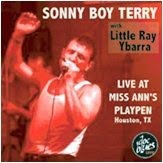
Sonny Boy Terry Interview by Abby Owen


Houston, Tx – Sonny Boy Terry from Houston took his band to Memphis earlier this year to represent the SE Texas region in the 2010 International Blues Challenge. He didn’t win, but after receiving an average score of over 8, which was pretty high according to Terry, he hasn’t been resting on his laurels. In January he undertook a buddy trip, a ‘pilgrimage’ to Mississippi to visit the Delta Blues Museum then on to pay homage at the grave of his name-sake Sonny Boy Williamson, stopping by the ‘Crossroads’ in Clarksdale of course, and on to the Hill Country Harmonica Festival in Waterford Mississippi. He is now in the last stages of putting together his own Texas Harmonica Festival taking place on July 31, 2010 at Dan Electros Guitar Bar in Houston. In June I spoke with him in his home in Houston, and found him to be extremely welcoming and talkative. This is how it went...

AO: So, my first question is, the name Sonny Boy Terry...
SBT: Okay, right. How to explain this. My real name is Terry Lynn Jerome.

I came to Texas in 1981, but I wanted to play Blues in Houston, so I broke into the scene. I got here in ’81 but I really started breaking into the scene around like ’83. Took me a while to really figure out what was going on and I was going out to see a lot of bands and hanging around and trying to play, you know? But it was a little slow at first, until I hooked up with Uncle John Turner, who was John Winter’s drummer.

AO: Wow.
SBT: Once upon a time, very famous drummer, Uncle John Turner. You Google him and he’s quoted very frequently in the new Johnny Winter biography. Quite a guy. I was all of about what, 23 and he was a 40-year-old, a very seasoned Blues and rock musician and he really mentored me and tutored me a lot. We were roommates. I slept on his floor. We were starving, and all that stuff. Basically, the ramen noodle circuit, you know. I slept on a kindergarten mat in his apartment in Montrose. So I broke in, playing around with bands with him and playing with TC and the Cannonballs. We did shows opening for acts like Los Lobos, The Nighthawks, John Hammond Jr. NRBQ, Robert Cray. That’s how I really broke into the scene. I was always just Terry Jerome. I played with TC and the Cannonballs for about a year and a half and I quit playing with them. I got a job playing with Jerry Lightfoot. Jerry Lightfoot was the white guy who knew all the black guys and was, well, integrated. He had Teddy ‘Cry Cry’ Reynolds in his band at the time. He had Andy ‘Two Hard’ Williams. Everybody had a stage name.

AO: Yeah, (laughs).
SBT: And you know, folks like that were in the band at the time with Jerry and Emmanuel AJ Murphy, who was once with Archie Bell and the Drells and a lot of people. Jerry hosted a Sunday night Blues jam at Fitzgerald’s downstairs.

(At Left) Terry playing with Albert Collins at Rockefellers in Houston.

AO: What year was this around?
SBT: This is around ’84, ‘85. Bud Jackson was the DJ with... I don’t think it was KPFT. Maybe it was KUHT. It was University of Houston Radio.

AO: Okay, yeah, 88.9 or something.

SBT: Yeah, whatever it is. Now it’s all classical but back then they had a Blues program and Bud Jackson was the Blues DJ. And he emceed our shows and, of course, promoted us on his radio program. I mean he had a great Friday night Blues program. Well, Jerry and I were all joking around backstage about stage names and stuff because there some guys around town that their stage name was changing or getting added on or always evolving, you know. And they started calling me like, Little One Hand Sonny Boy Terry. And we were just having fun with it but then Bud Jackson announced me as Sonny Boy Terry which is really a hybrid because there were two Sonny Boy Williams so its okay. There’s--

AO: Um-hmm. I’ve been researching it a little bit.
SBT: Okay, you know there’s John Lee Williamson.

AO: I’m like, oh, there’s two of them.
SBT: There’s two Sonny Boy Williams, John Lee Will, and then he died and another guy come along, Aleck Rice Miller and he stole his name. You know him as Sonny Boy Williamson. Then, there’s Sonny Terry which was Saunders Terrell who played with Brownie McGee, and he was a legendary blind harmonica player. So my name, because my real name is Terry Jerome, it’s a hybrid of all three of those guys plus my real name. And I did not name myself that. It just happened.

AO: Well, that’s the best way to get it, right?
SBT: Yeah, that’s how you always get your nicknames. Somebody else names you that. The next day Marty Racine from The Houston Chronicle published it in the Chronicle and it was almost like then it just sort of etched it in stone. That’s what they called me and they had fun with it and it sort of stuck. I was pretty young, so anyway, I kind of made it my name for myself.

AO: Well, where are you from originally?
SBT: I come from a little farm town in Northwest Ohio near Fort Wayne, Indiana called Van Wert, and there was really no Blues there. I was the only guy that liked the stuff at the time, you know?

AO: So you liked the Blues there before you came to Houston.
SBT: Oh yeah, way before. I came to Houston to play Blues. I wanted to go to the big city and play Blues. There were jobs down here in ’81 and it was right when Reaganomics was kicking in really good. Up there it was the rust belt and jobs were drying up. Like any bluesman, I followed the jobs where I could find opportunity. Of course, after several years in Houston, again the economy went belly up to for awhile. I had no choice but to try and get gigs.

AO: Yeah? Was there work down here?
SBT: There was work down here, lots of it. Yeah, and when I got here, I had never heard of the Fabulous Thunderbirds, or Stevie Ray Vaughan, only Chicago guys because I bought “Living Blues” magazines and bought the records and stuff. But I didn’t know too many of the white Southern guys, you know. So when I got here first I think I saw Stevie Ray Vaughn about a month later. And you have to realize, before when you talk about Stevie Ray Vaughan, you’re talking about...I mean now he’s commonplace, to the point of there’s a lot of people that copy him now, take him for granted, but if you saw him in ’81 before he’d made it big, and this is before David Bowie had him play on his ‘Let’s Dance’ album, right before he made it big. He was the most exotic cat I’d ever seen. He had a kimono on, and he’d sweat profusely under the stage lights wearing that hat, you know, and the duct tape cowboy boots and beat up strat, and the whole deal. But then I went to see the Fabulous Thunderbirds. Of course, Jimmy Vaughan was in that band at the time, Stevie’s brother, and I just couldn’t believe how great Kim Wilson was on the harmonica. What a great band it was. I’d never seen a band with a harp player that good before. So when I saw that I just, you know, you kind of feel like, like God dropped you there for a reason to learn, you know, or to grow. Because there was so much roots music going on in Texas. And you saw Rockin Doopsie, Clifton Chenier, you saw the Wild Magnolias. You saw the Neville Brothers. You saw Jason and the Scorchers. You saw The Blasters. You saw James Harmon with Hollywood Fats, Marcia Ball, Paul Butterfield, James Cotton.

AO: All coming through Houston.
SBT: All touring, coming through Houston. Then you had this incredible local scene, with all kinds of great players, you know. And everybody was accessible. Just an endless array of people, you know? And we just got all that experience and you saw it firsthand and you’re like part of it.
(Pictured at left)
- Harry Shepard, Sonny Boy Terry, Grady Gaines, Joe Guitar Hughes, Phil Marquez, Rex Wherry, Adam Burchfield, Allison Fisher, Benny Brasket, Jimmy Rose, Terry Dry, Bill Allison, Snit Fitzpatrick. 2001 Billy Blues album art photo shoot for Breakfast Dance. This photo is prominantly featured in Alan Govenar's new book 'TEXAS BLUES: THE RISE OF A CONTEMPORARY SOUND'

AO: Sounds like you were! (laughs).
SBT: Right away! Yeah, within two years. Yeah, two, three years. I was really green, too. But I was, I guess, solid enough to get it going, you know.

AO: What drew you to the Blues rather than rock or something else.
SBT: Harmonica.

AO: Yeah? So, the harmonica drew you there.
SBT: Yeah, oh yeah. And I knew what Blues was but once I started buying Blues, I started figuring out where all the good harmonica stuff was, because you’d mostly buy rock records. A lot of the bluesy rock bands of that era, would use harmonica on the recordings. The Stones, J Geils Band, and bands like that. But I listened to it all. I mean, I listened to the folk, the rock. When I was learning I was buying everything. I was trying to figure out how to play. I was interested in the whole broad spectrum. From Little Feet to Neil Young to The Stones to Howlin’ Wolf, and especially Muddy Waters and all his harmonica players.
I spent four years with Joe Guitar Hughes (Pictured with him in '92)and that’s like playing with Muddy Waters here in Houston. I spent a couple years playing with Kinny Abair on the streets in 3rd Ward. I played with Grady Gaines’ Band. But I spent four years with Joe. We played everywhere, all over the world. And we played 5th Ward, 3rd Ward, Sunnyside ice houses and juke joints on a consistent basis, you know? You’d get to know people pretty well. I’ve never had any negative experiences playing blues in blacks clubs ever. I was sometimes was poor and starving, but folks were always cool to me. Most of the folks in these places were older. I never saw guns or too much attitude.

AO: Well, moving on to the IBC thing. Tell us what it was like to win the regional competition and represent Houston in Memphis.
SBT: Uh, I allowed myself to do it because I trusted the people that were organizing it. They seemed to have it together, you know. I was a little concerned because from year to year it can be erratic in how they put their judges together. And I was real concerned. If it’s not professional it’s only going to favor an amateur. If it’s professional I feel like I’ll have a chance. And so I called them and I said you guys got it together, right? Rich DelGrosso’s wife was vice president. She organized most of it and James Nagle ‘Blues Hound’ helped her and, and they were real solid people. I trusted them.

AO: Yeah.
SBT: They were solid grounded people so that made it good and I--but it wasn’t easy because you have to do all these things to compete, you know, that you wouldn’t normally do.

AO: As what? Tell us.
SBT: You have to dress up in suits, you know, and play the game. You have to edit your material. It all has to be done within a certain time constraint, you know, like you’re going on TV or something. And then I just studied the scoring. I said, well, I have to trust this process. The scoring says it favors Blues or content. It favors originality. It favors showmanship. So that made it a little more appealing to me. I don’t think it was that easy though. We had to really prepare for it. It was very nerve wracking to do it, and I had to coach my band and really talk to everyone and making sure everybody’s on the same page.

AO: So you probably didn’t even get to really enjoy the experience as much because you had to be…
SBT: Oh no. We had a ball. After we won the thing here we...they had a bunch of gigs for us. It was one of the best experiences of my career. Totally positive.

AO: Oh okay.
SBT: We played House of Blues. We played a big fundraiser and then they had a big send off party for us and stuff, you know... after that, yeah, we were playing all over town and it was helping me raise money to pay my musicians to make the trip.

AO: Yeah, I remember seeing all the announcements about it and stuff.
SBT: It was really cool.

AO: How’d you like Memphis?
SBT: The IBC throw the best party in the f---ing world for Blues. There’s hundreds of bands there for this deal.

AO: Have you ever been to Memphis before?
SBT: Oh yeah. Yeah, I recorded with Johnny Copeland in Memphis.

AO: Okay.
SBT: And in ’96 when I was president of the Blues Society we won KBA, Keeping the Blues Alive award for best Blues organization. So I went to Memphis to accept the award for that. I recorded with Johnny Clyde Copeland for his “Catch Up With Blues” record.

AO: Oh, okay.
SBT: But that party was great. And the thing about winning was...

AO: Which party?
SBT: Memphis, I mean, it’s a big street party.

AO: Oh really?
SBT: It’s massive. I mean, it’s a massive party and there’s bands everywhere and there’s showcases everywhere. There’s two, three hundred bands there. And there’s thousands of musicians and people from all over the world there. I highly recommend it. You want to have a party, have a good time, and it’s not that expensive...

AO: Go to IBC.
SBT: Yeah, it’s fun, man. It’s huge fun. It’s nerve wracking. The first night there is really nerve wracking because you don’t really know who these other bands are. But we did well. Grady Champion won our bar and he won the whole thing that year.

AO: He’s local from Houston?
SBT: No, he’s from Indianola, Mississippi. This is about 40 miles outside so he was well known and he had competed at least once or twice in the IBCs before. So wasn’t like it was his first time. So yeah, he took the whole enchilada. And then there were other bands. We went to the finals and we had fun. I mean, I was advised when you get there you network and be a good guy and shake hands and work your way into a couple jam sessions and get to know people. Because there are so many variables going on and the best guy doesn’t win all the time and, and there’s all these different things going and you’ve got to know and understand why in a mature way going in, you know. And make the best of the experience because, because if you’ve got the goods...

AO: Just be in there.
SBT: If you got the goods they’re not going to ignore you.

AO: Right.
SBT: They’re not. Because they know that from bar to bar all these judges are volunteers and they’re all different. All the good judges may be somewhere else or they have different tastes. So you really don’t get caught up in that too much. You go there to win but you...we scored real high though. Our scores were, you know, eights and nines. We had an over eight average so that’s pretty good.

AO: Awesome, good.
SBT: That was out of ten so that was pretty good really.

AO: That does feel good.
SBT: Real positive. Very positive comments and we created a buzz, you know. We made a little splash there. Satellites play my music now, so.

AO: Alright!
SBT: They weren’t before.

AO: You can’t beat that.
SBT: They were talking about me and talking about Houston. It’s a great way to get your name out there, especially if you can really play.

AO: Well good.
SBT: We laughed and cried and had all kinds of fun. It was really huge fun. I met so many people.

AO: That sounds like a great experience.
SBT: Yeah, so anyway, that’s pretty much my IBC experience. I’m still milking it. I mean, I met Bill Wax when I was in Memphis from XM and I told him I was going to send him my product, and I sent him a book and all kinds of shwag. It took him a couple of months to get to my CDs. Now he’s playing it and talking about me on the air, so that’s big.

AO: Tell us a little bit about the thing coming up at the end of July, the harmonica festival.
SBT: I have produced several of these before. I was trying to put a little different spin on it and create a little clinic so that’s why I asked Adam to come in.

AO: And he is coming.
SBT: Yeah, Adam Gassow is coming, and I mean, he’s quite a renaissance man. He’s written and published several books. He’s an English professor at University of Mississippi. He’s a harmonica guru, instructor extraordinaire and a Blues performer. So he’s kind of all over the place, you know. He’s really a pretty interesting person.

AO: And that’s going to be July…
SBT: July 31st at Dan Electro’s Guitar Bar in Houston, TX.
You can get all the details. I teach, too, so I’m basically operating this through Houstonharmonicalessons.com. I use that to kind of launch this festival and to market my sideline, teaching blues harmonica. So I’ve got Adam coming in. I’ve got a friend of mine Larry Bernal with his band, the H-Town Jukes. He took lessons from me ten years ago. So he’s out gigging and he’s got a record out now.

AO: Look what you started. (laughs)
SBT: Yeah, so I thought it would be cool to have him play. They’re going to be there for the flow when people are coming in for Adam’s clinic. And then, that night we’re doing four acts with Adam Gassow, my band, and then Rob Roy Parnell who is really good from Austin. His brother is Leroy Parnell. I don’t know if you ever heard of him, a very famous song writer and guitar player.

AO: His name sounds a little bit familiar...
SBT: So Robert Parnell is quite a player and then Dave Nevling and the Blues Cats from Kemah, from the Kemah/ Seabrook area. All these guys got good technique in their playing and I wanted to get guys that can kind of elevate the respect for the harmonica because a lot of guys, you can tell they quit learning, you know, and then they just, they just sort of blow. ~ Continued in Part Two Next Month

Stay tuned for 'Part Two' of the interview which will post August 27th, and I will be able to include some pics and a follow up on the Texas Harmonica Festival, organized by Sonny Boy Terry, along with more stories from the road, and his pilgrimage to the Mississippi Delta.

Abby Owen - Copyright@2010 – All rights reserved.
Interview photos by Brian Smith - Copyright@2010 - All rights reserved.
All other photos used by permission, courtesy of Sonny Boy Terry, all rights reserved.

A Blues Salute To Black Sabbath - by J. Blake


(New York, NY)

“Black Sabbath’s major contribution has been to successfully capture the gist of specifically seventies culture through their music. They relate to this impersonal, mechanical decade much as Delta bluesman and their Chicago spin-offs related to their eras; by synthesizing collective feelings and giving their contemporaries hope by revealing the disaffection that unites all of them. In that remote but real sense, Black Sabbath might well be considered true seventies bluesmen.” –Gordon Fletcher, “The Sabbath Search For Peace,” Rolling Stone Magazine, 14 February 1974, p55.

The above quote is something that I read a long time ago and it has always stuck with me. It expresses a notion that ultimately questions the definition of blues; something I’ve been thinking a lot about lately. Obviously very few, if any, would accept the idea that Black Sabbath was a blues band for their time, but let’s, just for moment, think outside the box and consider the notion.

Putting aside the fact that Black Sabbath started their careers as a pretty straight forward British blues band, their greatest accomplishment was that they became the first true heavy metal band and in actuality heavy metal (in general) and the blues are very similar. They may not be working entirely off of the same musical conventions, but thematically they share much more than most people realize.

An excerpt from Robert Johnson’s Me and the Devil Blues:

Early this morning, you knocked upon my door.
Early this morning, ooh you knocked upon my door.
And I said, “Hello, Satan, I believe it’s time to go.”
Me and the Devil, were walkin’ side by side.

An excerpt from Black Sabbath’s title track:

What is this that stands before me?
Figure in black which points at me.
Turn around quick and start to run,
Find out I’m the chosen one.
Oh No!
Big Black shape with eyes of fire,
Telling people their desire.
Satan’s sitting there, he’s smiling.
Watches those flames get higher and higher.

Though Satan and the occult are usually considered to be things strictly associated with heavy metal, the Devil has actually played a character in recorded music since the blues began making its way on to acetate. Throughout the 1920s and 30s, Sam Collins, Charlie Patton, Robert Johnson, Skip James, Lonnie Johnson and many others, all recorded songs that involved Satan. Some scholars even believe the name “blues” is actually derived from term “blue devils”, meaning melancholy and sadness (Wiki).

The Devil as a character, or used as imagery, is an element of blues music that seemed to die out after World War II, as the genre became electrified and made its way to more metropolitan areas. Though the Devil would rear his head sporadically throughout subsequent decades, in songs like The Rolling Stones’ Sympathy for the Devil; it wasn’t until Black Sabbath and the creation of heavy metal that the character would be given the full spotlight once again.

To explore the relationship between heavy metal and the blues further, let’s ask ourselves “what exactly is blues music?” It is/was music created by the lower-class in an effort to express their plight. They took a look around them and wrote about what they saw. They wrote about their lifestyles, about their relationships and about their fears. Yes the blues can sometimes be fun, upbeat and even comical, but it is normally characterized as being brooding and sad. In essence, blues artists have always written about what they know; they have always written from the heart and most importantly, they have always attempted to express the “not-so-pretty” truth that many artists seem to be avoiding.

Heavy metal (and specifically Black Sabbath) has always shared these same ideals and has always set out to accomplish the same goals. The members of Black Sabbath were working-class kids from a steel town in England. Their guitarist Tony Iommi lost the tips of two of his fingers (on his fret hand) in a factory machine accident and even after the band began to gain popularity on the club circuit, their front-man Ozzy Osbourne couldn’t afford to own a pair of shoes. These were guys that had ‘the blues’!

It was 1969/70 and as many music artists were experiencing the summer of love in America and bands like The Beatles were preaching love and peace, the members of Black Sabbath looked around at their poor dreary surroundings; they read about the horrors of the Vietnam War and said “why isn’t anybody writing about this?” So they set out to write about the darker side of life. As some artists wrote about God and the euphoria of mind-altering drugs, Sabbath wrote morality tales about the Devil and the dangers of losing yourself to ‘the needle’. They wrote about the horrors of war and the fear of atomic destruction. Like the bluesman that came before them, Black Sabbath wrote about what they knew and expressed the (just plain) ugly truth that surrounded them. They observed a menacing and harsh reality and they needed a sound that would do it justice; and unfortunately a 12-bar shuffle wasn’t going to cut it…and thus, heavy metal was born.

Whether it is the fact that (like blues) Black Sabbath’s music stereotypically doesn’t contain traditional chorus/bridge song structures, or that guitarist Tony Iommi’s lead-work is all derived from pretty standard blues and jazz scales, or that rhythmically songs like Wicked World and Fairies Wear Boots are actually utilizing elements of swing, or even that the lyrics of N.I.B. weave a very blues-like tale about unrequited love (albeit from the Devil’s perspective), the similarities between the music of Black Sabbath and the blues are almost endless. We could certainly go through each album/song and continue to make the case that Black Sabbath is a blues band, but really what would be the point?

At the end of the day, like beauty, the blues is in the eye of the beholder. What I do ask is, with Black Sabbath’s first two albums (BLACK SABBATH and PARANOID) celebrating their 40th anniversaries this year, let’s put aside our music prejudices and give a big blues salute to four guys from Birmingham England, that not only invented a (still thriving) style of music and helped shape guitar-driven rock forever, but most importantly told the truth as they saw it…no matter how ugly it may have seemed.

If you enjoyed this article, you may also enjoy: Meantooth Grin

Thanks and keep reading American Blues News and also check out Media Wah Wah for more of this writer's opinions about Movie, Music and TV.

NYC blues fans, make sure you check out Jack Bruce & Joey Molland live at B.B. King's Blues Club and Grill on August 10th and John Mayall on the 13th!!!

Copyright © 2010 - J. Blake. All Rights Reserved


Blues Harp Blowout by Nelson Onofre


OK, my fellow Blues lovers, this week I am featuring photos from Mark Hummel's Blues Harmonica Blowout which was held at the BB King Blues Club in New York on April 19, 2010. This is a series that started back in 1991 and has gone on to become quite a big deal, showcasing some of the top harmonica players around. This edition of the blowout featured Magic Dick, harmonica player extraordinaire from the J. Geils Band, Sugar Ray Norcia, Dennis Gruenling and Steve Guyger.

I was particularly excited to have the chance to see and hear Magic Dick once again. The only time I saw him perform was with the J. Geils Band and that was maybe in the 70s at a show in New York's Central Park. That was also the same place I got to first hear James Cotton right around the same time. At that time I think the tickets were less than five dollars. Imagine that!
I had already seen Dennis Gruenling at a past Blues Harmonica Blowout and he is always entertaining. I've also seen Steve Guyger perform at Terra Blues. This was my first time seeing Sugar Ray Norcia and he was quite the crowd pleaser. Some of you may already know he was a member of Roomful of Blues in the 90s.

This is a series that is highly recommended if you're a lover of the Blues and most certainly if you're a harmonica player. This is great chance to see the cream of the crop in the Blues harp world. I'm sure Mark will be back at BB King's next year with another crop of top players. I will be featuring some more photos from the show next week as well so I guess this can be considered Part 1.

My thanks as always to Laura Becker of Big Machine Media for the guest list/photo pass credentials. Having the support of people like her makes my job easier. And like I've said before, if you find yourself in New York City by all means stop by BB King's club. It's a great place to catch some live music. Those of you who have followed my posts can see some of the great artists I have seen there.

Nelson G. Onofre
e-mail: nelson@electriceyes.us
my websites: http://www.electriceyes.us/
http://electriceyesphotography.blogspot.com/

photos: All Rights Reserved
click on images for a larger view

Dennis Gruenling
Mark Hummel's Blues Harp Blowout
BB King Blues Club, NY, April 2010
http://www.markhummel.com/bhb_stars.html
photo: Nelson G. Onofre © 2010 Copyright

Dennis Gruenling
Mark Hummel's Blues Harp Blowout
BB King Blues Club, NY, April 2010
http://www.markhummel.com/bhb_stars.html
photo: Nelson G. Onofre © 2010 Copyright

Dennis Gruenling
Mark Hummel's Blues Harp Blowout
BB King Blues Club, NY, April 2010
http://www.markhummel.com/bhb_stars.html
photo: Nelson G. Onofre © 2010 Copyright

Dennis Gruenling w/Rusty Zinn on guitar
Mark Hummel's Blues Harp Blowout
BB King Blues Club, NY, April 2010
http://www.markhummel.com/bhb_stars.html
photo: Nelson G. Onofre © 2010 Copyright

Steve Guyger and Mark Hummel
Mark Hummel's Blues Harp Blowout
BB King Blues Club, NY, April 2010
http://www.markhummel.com/bhb_stars.html
photo: Nelson G. Onofre © 2010 Copyright

Steve Guyger
Mark Hummel's Blues Harp Blowout
BB King Blues Club, NY, April 2010
http://www.markhummel.com/bhb_stars.html
photo: Nelson G. Onofre © 2010 Copyright

Steve Guyger
Mark Hummel's Blues Harp Blowout
BB King Blues Club, NY, April 2010
http://www.markhummel.com/bhb_stars.html
photo: Nelson G. Onofre © 2010 Copyright

Steve Guyger
Mark Hummel's Blues Harp Blowout
BB King Blues Club, NY, April 2010
http://www.markhummel.com/bhb_stars.html
photo: Nelson G. Onofre © 2010 Copyright

Rusty Zinn and Steve Guyger
Mark Hummel's Blues Harp Blowout
BB King Blues Club, NY, April 2010
http://www.markhummel.com/bhb_stars.html
photo: Nelson G. Onofre © 2010 Copyright

Mark Hummel and Sugar Ray Norcia
Mark Hummel's Blues Harp Blowout
BB King Blues Club, NY, April 2010
http://www.markhummel.com/bhb_stars.html
photo: Nelson G. Onofre © 2010 Copyright

Sugar Ray Norcia
Mark Hummel's Blues Harp Blowout
BB King Blues Club, NY, April 2010
http://www.markhummel.com/bhb_stars.html
photo: Nelson G. Onofre © 2010 Copyright

Sugar Ray Norcia
Mark Hummel's Blues Harp Blowout
BB King Blues Club, NY, April 2010
http://www.markhummel.com/bhb_stars.html
photo: Nelson G. Onofre © 2010 Copyright

Sugar Ray Norcia
Mark Hummel's Blues Harp Blowout
BB King Blues Club, NY, April 2010
http://www.markhummel.com/bhb_stars.html
photo: Nelson G. Onofre © 2010 Copyright

Sugar Ray Norcia
Mark Hummel's Blues Harp Blowout
BB King Blues Club, NY, April 2010
http://www.markhummel.com/bhb_stars.html
photo: Nelson G. Onofre © 2010 Copyright

Dennis Gruenling, Magic Dick, and Steve Guyger
Mark Hummel's Blues Harp Blowout
BB King Blues Club, NY, April 2010
http://www.markhummel.com/bhb_stars.html
photo: Nelson G. Onofre © 2010 Copyright

you might also like James Cotton here
please come back often and bring your fellow Blues lovers


The Blues is not Dying but ALIVE and Well, a repudiation of ignorance by Robert "Nighthawk" Tooms


(Memphis, Tennessee) My dear friend, Jeff Fedora, who is the uncle of my guitarist buddy, Josh Roberts, posted a response to an article in the Wall Street Journal by Jim Fusilli. It's called "Lamenting the Future of the Blues." By the way, the people pictured above are all BLUES FANS photographed at a BLUES FESTIVAL in Jacksonville, Florida this very year. I do not think you can convince them that the future of the Blues is dismal. My contrary opinion is at the bottom of the page.

Here's a link to Fusilli's article of lament: http://online.wsj.com/article/SB10001424052748704002104575290532300233738.html


Jeff Fedora

Here's words of wisdom from Jeff Fedora:

Will the Blues Die?
Share
Recently the new President of the Daytona Blues Society, August Wenger, forwarded me an article from the Wall Street Journal that questions the longevity of the Blues-- I encourage you to read it. It's a good article and is attached at the end of this note. But, it speaks to the heart of an issue and a long-standing thorn in my side regarding how we handle this prospect of “preserving the Blues”.

The article is an accurate telling of the delicate balance of one’s considerations to make in adhering to “keeping the blues alive” as one's mantra. Once somebody makes a connection to the blues, or even the roots let’s say, then begins that listener’s pilgrimage or divination to purity— truth. And, spanning from the birth of the “music industry” into this new millennia the blues have been kept alive from young lads making progressive rock albums and, when asked where they got their inspiration for this remarkable sound, they pointed their bleeding fingers to the likes of Muddy Waters or Willie Dixon in allegiance. But the trend of college students “turning on” and following the lead of their new icons and their anthemic bombast and swagger single handedly revitalized the careers of blues and folk artists from generations past. That is still the movement that we remain a part of today— to find the source and jump in that river and take the ride-- not bottleneck it and store it away. A “blues purist” is self-motivated and will continue to sleuth out the source— everyone else must be shown the way.

The plight of an artist whose goal is to remain inspired while inspiring the multitudes is the same today as it was then— to remain one generation removed from the roots—the wellspring. There simply is no other way lest that artist falls into the easy trap of repeating the formula of the popular artist before them to fast track themselves to a record deal and that begets Britney Spears ultimately and, who in this culturally depraved and vacuous world needs that?

My message to the Daytona Blues Society, or any blues society, has always been to employ any method or resource available to fulfill its mission at any cost— the rules are, there are no rules! New blues fans must be created then edified—in that order. Help them find themselves and then show them the way-- and that road is wide my friends. It is important for any institution about this business to fully understand this mechanism. You can “preserve” what’s left of a mastodon-- those are long gone and are not coming back. The blues, on the other hand and as of the time of this writing, are very much alive. What are the blues? I dunno, the verdict is still out as it evolves day by day like it has for generations upon multiplied generations. I can say with certainty that Robert Johnson is “the Blues”. Or I can say with the same certainty that the North Mississippi All-stars is “the Blues”. West African Griot music is “the Blues”. The roar of Johnny Lowebow is the blues. In fact, the blues is not even a sound but, more accurately, a mind set that regards a truthful alignment to the human condition—it’s rejoicing in your suffering, I say, and what ever the hell that might sound like, that’s what the blues are!

It’s rarely the artists that are confused about this. My dear brothers in the Church of Memphis understand: Josh Roberts, Reba Russell, Robert Tooms, Doug McMinn, Jeff Burch, Vic Wainwright, Greg Gumpel, John Lowe, Brandon Santini, Brad Webb, Sliver Michaels, and more – they know the drill and, more importantly, they understand the importance of a close nit community.

My Daytona and Central Florida Brethren and band mates: Bob Thames, Franklin “Slim” Williams, Cynthia Renee, Ronnie “Bird” Foster, Aaron “Pops” Watson, Ben Bost, Chad Dant, Toots Lorraine, Anthony Wild, Stephen Dees, Mark Hodgson, Joe King, Dan Walters, Mike Welch, Walt Andrews, Brian Bassett, Toby "Lefty" Fletcher, Reno Mussatto, Bird Dog Bobby, Big Rick, August Wenger, Shaun Rounds, JW Gillmore, Joe Caruso, Paul Zerra, Homegrown Roots Jamborie, Joe Alegro, Don Oulette, Ernie Lancaster, Moe Jackson, Louisiana Steve Hutter, Reuben Morgan, Jake Nicely and countless others I’m omitting for brevity—they’re never confused about the music they play and their relation to the Blues and they always bring their best to the blues fans in our community.

And to the entire staff (past and present) of the Daytona Blues Society-- the future of the Blues in Volusia County has always been kept safe by the work of your generous hearts.

But sadly, the folks who loose their way are those individuals who devote precious time and energy to proliferate blues societies and other organizations across America with the intention of “supporting” the blues. But some of these folks get so snared by their own narrow definitions and limited understanding of what “blues” are and should sound like that, in an attempt to protect the institution they serve, eventually snuff the life right out of it. In this industry we call those “Blues Nazis” and by definition would be those who would employ genocide to preserve their own notions of cultural or racial purity. I am a rabid blues fan, so much so, that I would start a blues society and serve it for 6 years till now and more going further. I can say, with my credentials in hand, that my energies were spent entirely in resisting the “Blues Nazi Movement” to keep the front door of the church propped open at any cost in the event a new stray blues-convert could find his way into the fold. In that moment in time, all that “convert” knows about any of this business is that “something in that music” resonated in him. The Fact is, a new “blues fan” knows no more about the blues than a heathen knows about the Lord Jesus Christ!

So, again to the question of how do we promulgate and nurture the Blues? We remain open-minded to challenging and inspiring our selves as artists and, as listeners, we remain open eared to the work and contributions of the artists in our community. If we don’t “like” something, it just simply means we don’t personally like it—perhaps avoid it and nothing more. Most importantly, we all remember the important need and value of a progressive community of Artists, Fans and Venues willing to buck the system to nurture this country’s most valuable resource—American Roots Music.

Can the Blues die? Maybe by the feet of the very people who set out to “pickle” the blues on a dusty shelf (albeit with good intention) lest they take heed and change their ways. Having said all that, if anything, let’s preserve the “blues fan” because that is who stands the risk of going the way of the mastodons and becoming extinct if they don’t receive a check up from the neck up and open their minds and hearts.

But I’m going to side with Grant Green here. He was an artist that played blue-note jazz renditions of popular Negro Spirituals. I heard his soul and I believe I trust his judgment. He said, “the Blues is Spirit and you can’t kill spirit”.

Kind Regards and please repost to your fans!

Jeff Fedora
Founding President, Trustee
Daytona Blues Society

My friends Jeff and Amyah

And now some unvarnished opinion from the American Blues News:

What Fusilli did not discern is that men like Pinetop Perkins and Buddy Guy, who both played for Muddy Waters, are revered by blues fans and their fellow musicians, not only because they are the last direct line to our beloved music's origins, but because their unique contributions are still shaping the music and young people who play it in the modern day. Fusilli complains that he did not hear any "new blues" but this complaint can only be laid at his feet, not at the genre.

Had Fusilli ventured out past his hotel room or the Marriott ballroom where the awards were held, say a few blocks south to Beale Street, he would have had his ears filled with lots of new Blues from the mouths and instruments of Brandon Santini and Delta Highway, the Eric Hughes Band, Miss Zeno or any of a myriad of new artists who jammed on the street after the awards. I myself jammed with Zac Harmon and a bunch of highly competent Chicago Blues guys at Mr. Handy's Blues Hall until 3 AM. Had he walked or taken the trolley two or three blocks south to the Madison Hotel he could have heard new Blues as Reba Russell played that hotel's beautiful rooftop party before the awards ceremony.

Good blues, like other niche music forms, requires just a little exploration to discover the new, exciting and original proponents of the idiom. Fusilli does not demonstrate that he is versed in Blues music and his article comes across as the whining of an uninformed dilettante who neither had his dream "new Blues" delivered by room service nor was willing to take the time to go six or seven blocks to find it. In fact there was no mention of any up and coming Blues artists in his article, only a couple of mentions of some artists attempting to put some Blues in their Rap music. That hardly counts and comes off as lazy reporting. At least try a search for "Blues" on itunes next time.

The truth is that the Wall Street Journal as a newspaper is more likely to become extinct more quickly than the Blues will. This article as an example of their insightful perspective is certain confirmation. Perhaps they should stick to the financial markets and other subjective topics like astrology, stock market trend predictions and tea leaf reading at which they can at least feign more knowledge than this.

Fusilli writes, "If you can sound like Stevie Ray Vaughan on electric guitar, you can find a place in today's blues world." I don't know who he is talking about here as the Stevie Ray Vaughn-a-be copycat syndrome passed many years ago. None of the winners of this year's IBC (which Fusilli obviously did not attend) could be described as Stevie Ray imitators, not a one of them. I was there. Did this guy actually talk to anybody before writing this sad little article or just get drunk in his hotel room and make this stuff up? What seems more likely is that here we have the Journal's Pop and Rock music contributor completely out of his element and way over his head in regard to his knowledge of Blues or the modern artists who play it.

I wonder how many blues shows he has attended or how many blues recordings the man has ever bought? Not many, I imagine, although he has written a fictional novel called "Tribeca Blues" which has nothing whatsoever to do with Blues music...he just liked the name. Perhaps his writing inadvertently shifted into fiction mode. Nonetheless, after a few moments with Buddy Guy in a telephone interview he has determined that the future of the Blues is dismal.

Here we have a guy from Tribeca who wrote a book about the Beach Boys'
Pet Sounds commenting on the future of the Blues. Mr. Fusilli, Robert Gordon you ain't.

An excerpt:

"The blues establishment seems to have little interest in reaching out to other musical communities. No rock, hip-hop or jazz artists with a musical debt to the blues were part of the activities in Memphis. Perhaps in turn, blues musicians aren't invited to participate in most major rock festivals: There were no traditional blues artists at this year's Coachella Valley Music & Arts Festival, nor will there be any at the Glastonbury Festival in Britain later this month."

Amazing! Stop the presses! This just released, this week there were shockingly few Jews in the Baptist Church and fewer Baptists seen in synagogues! Thank you, Captain Obvious. What he failed to mention is that Blues is indeed often represented at events billed as "music festivals" and also "jazz festivals." I wonder what he figures are the influences of Jeff Beck or Eric Clapton?...Wonder if he thinks they play blues?

Moreover, I have toured in Great Britain, Mr. Fusilli, and they have much more love and appreciation for Blues than you, sir. Speak for yourself. Contrary to Fusilli's inaccurate reporting, Glastonbury will indeed have Blues acts, here's the poster: http://www.glastonburyfestivals.co.uk/line-up-poster/.

Fusilli seems petulant that blues fans do not particularly appreciate nor buy recordings that mix rap with blues. So what? Do classical or country fans go for it?... since we are waxing absurd how about some bluegrass electronica with a side of trombone, perhaps? He then concludes that not many blues artists were present at Bonnaroo...wow, do tell. His "conclusions" are either so wrong or so obvious, so startlingly rudimentary as to not be worthy of a bathroom stall read. Lacking knowledge of modern Blues artists and having a deadline to make he fell back on writing about what he actually knew about, Rock and Pop. I suppose the gloomy title for the article is to try to gain a few readers with the old tired, tried and not-so-true sensationalism.

Fusilli seems to fault the Blues and question its survival because it is not Pop, Rock or Rap and it is not "reaching out"to those music forms as if there is no future life or music appreciation possible without Pop, Rock or Rap. Here's what I believe to be the greater truth. Fusilli does not particularly like Blues music. This is the guy they sent to the Blues Music Awards and Hall of Fame Induction? Mr. Fusilli, since you have not noticed it, the Blues was alive long before any of those other music forms and will likely be alive and well after some or all of them have perished. Furthermore, Jazz and Blues are irrefutably the ONLY true indigenous American music forms and all the other stuff can thank Jazz and Blues for their existence, e.g., your beloved Beach Boys lifted the preponderance of "Surfin' USA" from Chuck Berry who started his career as a blues man. Years after the song's initial release, Chuck Berry successfully sued the Beach Boys, causing all subsequent releases of "Surfin' U.S.A." on compilation albums to credit Berry alongside Brian Wilson, who wrote the new lyrics.

As a positive note, as history continues to repeat itself, the Wall Street Journal, in it's continuing efforts to appeal to a wider audience and diversify it's reporting to include music and art criticism, still does a fine job of relaying stock prices.

On an even more positive note, The Blues Foundation is flourishing, there are over 185 affiliate Blues societies across the world and it is more financially sound than ever before in its 30 year history. The Blues is ALIVE and well. You failed to note that in your gloomy prognostication despite allegedly talking to Jay Sieleman, the Executive Director of the Blues Foundation. My, what an in depth interview that must have been.

Here's another response to the 'Fusilli lament" from the Memphis Commercial Appeal's Mark Jordan, who is a fine music writer,

CD Reviews: The blues is alive and well and producing offspring

Here's an excerpt that mentions yours truly:

"Finally, back in Memphis, underappreciated belter Reba Russell has been the local standard bearer of the blues for decades. A much-in-demand session singer, the West Virginia native has always had the vocal chops, and her control and confidence have just improved with age. But only in recent years has her material — originals and her choice of covers — caught up.

Russell and her eponymous group’s eighth record, titled, in typical direct, no-nonsense style, 8 (Blue Eyed Bitches, 3 Stars), may be their finest achievement yet. The record is even more of a grab bag than Williams’, with some jazz and even a little light rock squeezed in. But Russell and the band, including husband Wayne and keyboardist Robert Nighthawk Tooms, nail it all."


Join the Blues Foundation and support the BLUES! Click here.

This weekend I will be traveling with the Reba Russell Band to visit "Gatorman" Terry Lape and hit the Chicago club scene on Friday, then off to Kankakee, Illinois, to play at the River Bend Club for the Friends of the Blues on Saturday and then to play more alive and well Blues in LeClaire Park on the beautiful Mississippi River, on July 4th at the Mississippi Valley Blues Festival in Davenport, Iowa. I will be reporting on all this fun with little or no mention of Pop, Rock or Urban music on next Monday's article here at the American Blues News.

The author at the Blues Foundation's 2010 Blues Hall of Fame Inductions

These opinions are not necessarily held by all the writers and owners of this site but are the sole opinion of this author, who is, obviously, correct in his observations.

If you think the BLUES are ALIVE and well, please join the American Blues News facebook page, just click here and click on the "Like" button.

RCT

© Robert "Nighthawk" Tooms, 2010

Interview of Felix Cavaliere by Monica Yasher


Felix Cavalaire and I had a very early morning interview. I just got my children on the bus and called Felix. He was in a time zone that was one hour earlier than mine. And, Wow! This man is a morning person!  He has such energy, and is so excited about his work! It seems that life can be in chaos in any family’s home, even a great musical legend such as Felix, who shared that he has four children and was used to getting the kids off for school days too.

Felix is a really fun guy to talk to. Yet, there is a seriousness to him as he talks about being blessed to achieve what he has done in his life musically, which does include being an inductee to the Rock and Roll Hall of Fame. Though his latest effort with Steve Cropper was computer inspired, he strongly feels that computers have their place, and that is not to fix the vocals of live performances. Felix is proud of his craft. He's proud of his vocal accomplishments and his songwriting.  Let’s see what Felix had to say about the music in his life and his new CD, "Midnight Flyer", that he produced with Steve Cropper.

Monica: Felix, let’s talk about songwriting. Felix, sometimes when I write a song it doesn’t come out how I would have thought. Not that it is a bad thing. But do you think sometimes the music just has to take you somewhere?

Felix: I put that in one of my lyrics as a matter of fact. That’s the fun of making music. Especially if you make music with other people, which I think is really the way it is supposed to be. Today we have a tendency to make our music by the computer. A lot of this album, believe it or not, was done via the computer, as the stimulus, the catalyst. It was based around that. I know that many will not identify with that with Steve and myself, because we come from the old school.

It was so much fun to start something that was totally generated by a software. And, then put our taste on that. I had a blast with it. The title song, “Midnight Flyer”, I grabbed those lycs right off of a program called, "Logic", that Apple makes. We wrote to that. It was so much fun! When you are young and have a band, you sit around and say, “Let’s go into the studio and write a song“. That’s kind of how we did this. Only instead of a whole band, we had three of us plus the computer (he laughed). Seriously the computer at this time was sort of like the drummer. It was like having an extremely talented international person in the studio with you that could sing and play and do anything you wanted them to do right on the spot. We had a ball. I really enjoyed it! You bring in new technology with the guys who are used to making records the old way, it’s very much fun!

M: Did you start with the drum track first?

F: Actually we started with the guitar track on there. There’s a guitar loop on there that is amazing!
I don’t know who played it. But it was excellent. I would like to thank him because it was excellent.
Whatever inspires to get an idea…that’s where it really starts. That’s where you begin to feed. We thoroughly enjoyed it.

M: How long did it take you to do this effort?

F: Because both of us are traveling musicians, and we are touring almost all of the time, it took us at least a year. We had one out previously. I think, last summer. The record company said we would like you to do another one. So, we got started. We couldn’t do it continuously. We had to do it when we were home.

M: Felix, I would like people to learn something from you. I would like to build on this. You are using canned computer tracks. For that artist out there that wants to do a song, is there licensing requirements or concerns with this?

F: The correct term is loops. When you buy a product such as Apple’s "Logic". "Logic" is a professional one. The amateur one is called, "Garage Band". They supply you with loops and basically the license is free, and you are able to use them. Of course, you can purchase loops from a lot of different sources, if you are so inclined.  A lot of the magazines like “Keyboard Magazine” and “Electronic Media” will do reviews on different CD’s that people make for loops. You can get drum loops, guitar loops, bass loops. It is amazing what they compile. What we did is used a loop to inspire a song. In other words, what a great groove that is. What a great beat that is. Wow! I’m going to write to that to this groove. Then after the song was completed, in terms of the lyrics and melody, we played to it. Like live. We actually wrote a lot of these songs right in the studio. Guitar, keyboards and loop.

M: This sounds like fun!

F: It was a blast. Because first of all the drummer was the computer, who can play anything. Anything! With all due respect to a lot of drummers, that really does it. From Brazilian to African whatever it may be. When you put a real drummer on top of that, which we did, then you bring in the human element. The inspiration that comes from that loop is really a lot of fun.

M: Cool. Now I read that you are co producer of this effort. Tell me about that experience.

F: When you have people like Steve and myself, Steve has been producing for years. I’ve been producing for years. You are really in charge of everything in terms of the writing, selection of the songs, the arrangement, the playing, everything. We really needed a third party, which was Tom Hambridge. Sort of like a referee (he laughed). You know? The United Nations Representative! (We laughed)

Tom has the most balanced personality . He is a real gentlemen, respectful of everybody, takes all opinions and puts them into play without any kind of upsetting anyone.  When a producer comes into a situation, unless it is a Phil Specter, who basically is responsible for everyone, he is utilizing the artists talents as writers, players, in order to make an album. That is basically what happened here. We had three people contributing at varying degrees. We were all very involved in the creation process.

M: I always believe that conflict yields a good product. If everybody is on the same mindset all the time it doesn’t always…you just need that devil’s advocate in there to say what about this….

F: Absolutely. I totally agree. Otherwise you just may as well make it all by yourself, which to me, is not the way music is supposed to be. Music to me, seriously, is like making love. It is an interplay between you and me. It’s got nothing to do with just me, me, me, me, me. When you play with other musicians that are really powerful, it is really a joy to hear the way they think about what you just started. They think the sound is different. Who is right or who is wrong? There is no such thing. There is no such thing as right or wrong. You hear it your way. I hear it my way. So, the important thing is for people to be respectful of one another. Not get angry. Not get ticked off. It happens a lot you know. But it’s really funny, because, who’s right? Believe me it’s gotten so technical today, that if you go around people who make music, they will argue about how fast or slow the song should be to the degree of point five.

M: Oh My!

F: It’s so subjective. We can control everything now. It’s absurd. It used to be you had a drummer and you played. Now you can get that drummer to play at the exact time you want with the speed. Believe it or not, that’s a big decision,  how fast or slow the song should be.

M: Oh it is.

F: A song has a certain place that it lives.

M: With today’s market, the shorter the better. You think about Pink Floyd, with their ten minute songs that can’t happen today.

F: You know why that is?  There’s a big article out about Google and all these programs are making our attention spans less than ten seconds.

M: It’s true.

F: We don’t have time. Now, bing, it’s done.

M: I’d like to talk about getting a group of people together, as you said, and everyone having their own ideas. I see that you did tour with Ringo Starr’s All Starr Band. What was that experience like? He puts great bands together.

F: It’s a lot of fun. For me I made a lot of friends. New people that I would never have met under any other circumstances. My tour with him was with Mark Farner from Grand Funk. We had Randy Bachman from Canada. We had John Entwistle, who passed away.  He was on the bass. Billy Preston, who also passed away, was on the keyboards with myself. Ringo’s son was a great, great guy. You know I never would have had the chance to play with one of  The Who or Billy. And, of course, Ringo.

Every time you open your eyes and see a Beatle, it’s kind of a Shock. (He laughs) It’s so much fun. He’s a really good, good person. He’s a guy who basically still has the love of being on stage and playing and getting that adoration and getting that thrill of the performance. It just never gone away with him. He’s like a little kid when he gets up there, which is pretty much like the rest of us….except he’s got a hundred times the money! (We both laughed.)

M: So he’s so much more happier!

F: Those guys are phenomenal.

M: Where are the lines drawn for you between saying I have a blues album, a funk album, a R&B album?

F: When I started playing music, I started playing as a classical musician. Then when I first went into the musical world, I was playing for everything. Weddings, Bar mitzvahs. We had to play everything. I don’t put myself into a category of I can only do this. We had to play whatever those people wanted to hear that night.  It was our responsibility to play it. I learned it all. Latin music. Love Latin music. I have incorporated that into my work for many years.

M: What was it like to perform with your daughter, Aria?

F: She’s a great singer. She really wanted to give it a shot to be in this business. She found out it is very difficult to be in this business period. Great singers are fun to be with. Great singers that are related like the Bee Gees or the Jacksons, they kind of have a certain something about singing together. I wanted to see if that would happen and it did! I was very proud of her. She’s a twin by the way.

M: Cool. I wanted to get to a voice question. I read in your early days that you thought your voice sounded bad, which is obviously not.

F: Thank you.

M: For that vocalist out there that gets the Simon Cowell of, "You shouldn’t be doing this!".  What is your encouragement for that vocalist? Can they be great?

F: I am fortunate. When we were coming up we had to do other people’s songs. That was demanded upon us from the clubs that we were working in. I tried to emulate all of these great singers. Whether I was doing it or not, I thought I was doing it. So I was doing Marvin Gaye, Smokey Robinson, Ray Charles, Rolling Stone, The Beatles, and trying to do my version of what I thought they sounded like. Low and behold something happens that becomes you. It’s kind of like learning how to paint when you learn the basics, and then learn from the masters and copy their work so you know how to do it. I think this is the same thing. Now whether you establish a style or not, that really to me is good fortune. I have no idea how that happens. I’m very, very happy about it, because I love to sing!

M: Well we love to hear you!

F: Enjoy it, that’s all I can say.

M: What do you do to keep your voice healthy today?

F: You have to sing. You have to sing. Like any muscle in your body, you have to work out. So I try to sing as much as I can. Especially when your doing studio work. It’s much more finite. On stage you can get away with more things. Those of us that can still sing on stage, that’s a dying art by the way, because of computers. When you do a word document you have that thing called spell check. Well we now have this thing called tune. Auto tuning. The computer programs are so sophisticated now that I can tune you live. A second delay, and you will never know it. But, I can tune you up live. It has become disgraceful. That’s all that I can say. I feed you into the laptop through the virtual tuner, which is getting faster as we speak, as you well know. No problem.

M: That makes me sad.

F: That’s the way it is. That’s what is going on out there. It’s taken over like spell check. People can’t spell anymore or write. I use spellcheck. I will use auto tuning as well. But, not live. I’m not pulling the wool over anybody’s eyes. In the old days you sang until you got it right. Now. Just sing. Go home and I’ll fix it.

M: Let’s get the look and we will fix it up.

F: Technology has changed everything. Negative side.  We have a tendency to think about how someone looks rather than perform. That’s not fair. That’s belittling to our craft. I’m sorry, it’s demeaning! Madonna got live performer of the year. Madonna won’t go on stage without this tuning. They should have a category best live performance with tuning. That’s not live. That’s canned. Elton John really reacted to that when she got that over sees. For those of us that try to keep our voices strong and tuned, it’s like a waste of time. That’s the world. Could you imagine a man like Bob Dylan going on American Idol today?

M: I don’t think he would make it today. Would he? He honestly wouldn’t make it!

F: Well Bob.  You may have to tuck in your shirt. (We both laughed)

M: People always speak of Bob Dylan as the Great Bob Dylan.

F: He’s the best. He’s a phenomenon. There isn’t an American songwriter that comes near him. What a writer. His body of work is unbelievable. The talent. All the songs that he has written and he is still writing. He’s an American icon for real.

M: Absolutely! Would you rather be known as a songwriter or a performer? What do you think?

F: It doesn’t matter. I moved to Nashville to continue to write and to be more part of that world. I figured I will not be able to tour the rest of my life and sing. It’s all great. It’s an honor to make a living at this. I’m very very fortunate. I love to produce. I love co writing with other artists to get their energy and their style. It’s all about making a living at something you love.

M: Hey don’t say you’re not going to perform. Honey boy is 94 and still at it.

F: He’s amazing! It’s becoming harder and harder out there because of the travel. It used to be a lot of fun to fly.

M: It’s kind of degrading now.

F: The old days we could load our own gear in the bay of the plane. Those days are long gone.


M: With your CD, will you be touring?

F: Not sure if it is feasible. It’s tough with the economy. It’s difficult on the road. A lot of the summer tours are less than they were a few years ago. I’d love to play this live.

M:  Well Felix, we would love to hear you. I want to thank you for your time.

F: Thank you, Monica.


There is a secret during this whole thing that Felix shared with me. Felix always had the term, Blue -eyed soul, associated with his music. Now, take a real good look at Felix’s picture. What do you see?

If you enjoyed this article, you may enjoy reading about another Rock and Roll Inductee, Kim Simmonds.

Copyright © 2010 Copyright Monica L. Yasher. All Rights Reserved.
Photos used by permission.

American Blues News Staff

What makes American Blues News unique is our coverage across America. Here is our lineup:

Mon: Memphis Correspondent - Robert "Nighthawk" Tooms
Nighthawk is our resident globetrotter and man behind the scenes, as he tours with the Reba Russell Band.

Tues: New York Correspondent - J. Blake
Blake is the American Blues News review and interview guru. You may catch him out and about in NY playing the blues.

Wed: National Correspondent - Monica Yasher
Monica is our executive director and artist interview specialist. You can catch Monica singing the blues around Pittsburgh or working on some country music songs in Nashville.

Thurs: Washington, DC Correspondent - Virginiabluesman
Geraldo offers inteviews and reviews. You may have seen him at an Ana Popovic concert or conversed with him on her websites, as he offers administrative support with her music.

Fri: Northeast Photographer - Nelson Onofre
Nelson offers a Friday column of blues photography and pictorial support for the interviews covered by the team.

Jim Stick in Colorado
Jim will be focusing on the Blues Festivals in the beautiful state of Colorado, and the artists that live and visit there.

Maureen Elizabeth, our resident art correspondent, will be focusing on blues art as she explores the creation of CD covers, or speaking with artists who also have a love of creating pictorial art in addition to their music! She may also feature some of her good friends in the Pittsburgh area. In her love of art, you may find Maureen's photography accompanying writer's articles on our pages. Maureen is also our marketing director.

Pittsburgh correspondent and photographer, CR Bennett, will share the Pittsburgh scene with all of you. You may also see CR's pictures accompanying other writer's articles.

We head to the big state of Texas! Abby Owen, our Texas correspondent.

Another big area to cover, the West Coast with Casey Reagan, Casey will feature many artists and events on this ocean's shores.

Lastly, we have our roving blues entertainment writer,
Chef Jimi.

And of course, we will surprise you sometimes!

 
Internet Marketingdata recovery