Page: http://www.ameriblues.com/
Showing posts with label Art and Blues. Show all posts

The Art of the Blues: Destruction, Devastation, Creation...ReTune Nashville...After the Flood. by Maureen Elizabeth


Inspiration comes in many forms. But who could imagine inspiration coming from a photo of a flood damaged guitar quietly sitting out at the curb waiting, not to be played, but to be purged.
Sheri O’Neal could imagine. And she could inspire. And she has taken that inspiration and breathed new life into the rusty echoes of flood damaged instruments. From this inspiration Retune Nashville was created.

The Purpose:

To offer relief to uninsured musicians in the industry through the sale of artwork created from these flood damaged musical instruments.

The Process:

Flood damaged music gear is donated to Retune Nashville and passed along to an artist who creates a 3D piece of artwork to be auctioned off for sale. Proceeds from the sale of the artwork will directly benefit uninsured musicians through MusiCares Nashville Flood Relief and the Nashville Flood Relief Fund.

The Struggle:

The music community was devastated as floodwaters ravaged storage facilities, venues and residences that housed musical instruments, tour rigs and other gear. "Today this community is struggling to overcome the huge loss they are now faced with and many have to borrow already scarce gear just to make ends meet." (ReTune Nashville)


An Artist: Nance Cooley

Nance Cooley is an artist who is experiencing both sides of the event. Nance’s husband, musician Bill Cooley, along with many others, lost his equipment which was stored at Soundcheck Nashville when flood waters devastated the facility. Following the flood, volunteers put all the equipment in triage in a warehouse. “It was so bizarre, they were like bloated corpses lying side by side on the warehouse floor,” Nance said, “some of it was literally irreplaceable, like collector’s items. It was heartbreaking to walk through.” Her husband also lost two handmade Galloup guitars which were very special to him. But as devastating as all of that was, they had friends who had lost their entire homes. “It was horrific,” Nance said,” we kept hearing more and more stories about people we cared about who had lost so much.”

Why did you get involved in ReTune Nashville??

As horrific as the loss of the instruments were for us, we were aware of how fortunate we are. Bryan Galloup, when he heard of my husband's loss, gave him another handmade guitar! I feel for the musicians and have a deep sense of loss, yet at the same time I have a perspective of what other people have also lost and as sad as it is, never really lose sight of that. This, to me, was a way to give back, to help someone else.

What pieces do you have to work with?

Guitars, dulcimers, violins, part of a keyboard, it’s incredibly eclectic. Some have tags, some have a back story, some are unrecognizable. I hope to create a 4 part piece.


So you are hoping to bring these instruments to life?


I am in a unique position. This is my husband’s livelihood. He has played with Kathy Mattea for the past 20 years . I know how you cherish things when someone gives something to you. And to see these cherished items collected into pieces is heartbreaking. Yet they are still beautiful - the softness of the wood contrasting with the hardness of the electric pieces. Of course you can’t be an artist and not want to take them apart. Now I have the opportunity to turn them into something – I have the opportunity to regenerate what was lost into something beautiful.


A Musician: Andy Zimmerman

The flood devastated many members of the musical community. Andy Zimmerman, Mike Williams and Christ Mironescu are members of the band “The Running” whose music is described as “a funky mix of rock reggae and blues.” Read Andy’s journal account of the flood as it swept into his girlfriend’s home…

Friday, April 30th 2010
After work, I went straight to sound check at Exit/In (where my band was playing that night). Following sound check, I went home, showered, ate, and returned for the show. We went on around 11:30pm and played until about 1:30am. As we loaded our gear in the back of my 08’ Ford Escape (that I just bought a month ago), someone was telling me that a bad storm was coming through the next day. Taking that advice, we decided to leave the gear loaded and head out for our show in Knoxville early to get ahead of the rain.

Saturday, May 1st 2010
Awoken by my bass player Christ’s phone call around 10:30am, I could already hear the rain outside. Luckily, we did get ahead of the storm and the drive to Knoxville wasn’t that bad. Arriving around 4:30pm EST, we had just enough time to grab something to eat and get to the venue for sound check at 6pm. The show started around 9pm and we went on around 11. After the show, we were all just ready to go home and sleep in our own beds rather than unfamiliar couches (and possibly floors), so we headed out.

Sunday, May 2nd 2010
Arriving in Nashville around 4am, my girlfriend Michelle and I decided to stay at her place because we didn’t want to wake up my roommate. In retrospect, that was one of the worst decisions EVER. As I parked in her driveway, I noticed her backyard had been flooded by Saturday’s storm. Like I said earlier, we hadn’t talked to anyone at this point and had no clue that another round was on its way. For all we knew, we were going to sleep till noon and have a lazy Sunday to rest from the busy weekend.

It was exactly 8:41am when Michelle woke up because of the heat (apparently the AC unit was already under water). I shot straight out of bed to her screaming at me from the kitchen, looking at this:


Trying not to panic, I was thinking I might be able to wade out and save some of the band’s gear. Luckily, I noticed the water level in the garage before I got dressed. When I glanced again right before I headed outside, the water had risen approximately 6 inches in the matter of 5 minutes. I abandoned that plan real quick and switched my focus on getting us to higher ground. The current was rushing straight at the house, so swimming was out of the question (not to mention idiotic). No options left but the roof. By the time we got our important stuff into zip lock bags and stuffed in our pockets, this was the scene in her living room:


By the time I boosted Michelle up on the roof and stacked a pile of patio furniture to get up, it was around 9:15am. Notice the mailbox, lawn mower, and covered boat (top right by the white truck)


We called the authorities and notified them we were stuck on the roof and they pretty much said they would get to us when they could, but thousands of other emergencies took precedence. So there we sat, while someone threw buckets of water on us from close range. ~11:30am: (lawn mower was now in the backyard)


The toughest part of the whole situation was actually watching as the water rose inside my car, submerging our whole band’s gear.


Finally, a couple awesome neighbors came by in their fishing boat and rescued the older couple next door, then came back for us. By the time we jumped off the roof into the boat, the water was only about 3 or 4 feet from the gutters. I slept good that night for sure.


http://www.TheRunning.us
Guess we really are just a “dirty old garage band”

ReTune Nashville announced that the Benefit Concert and Art Auction Event is set for Saturday, October 23, 2010 at Nashville gear storage facility and rehearsal space, Soundcheck.
ReTune Nashville founder Sheri ONeal comments about the importance of using Soundcheck as the venue for the event, “From inception, we wanted to have the event at Soundcheck. It was suggested by musicians, and it's the place where a lot of heart-breaking damage was done. We wanted to turn something negative into something positive for the facility and for the musicians. We couldn’t think of a better place to hold the event.”To date, ReTune Nashville has collected more than 60 damaged instruments from the Nashville floods of May 2010 with more than 50 visual artists committed to bringing them new life.
For more information go to Retune Nashville at www.retunenashville.org
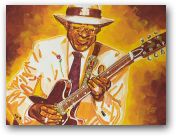
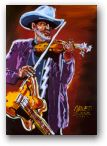
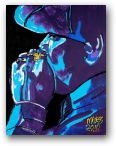
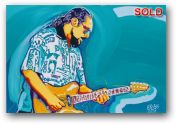
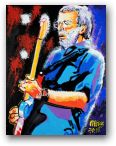
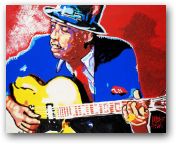
The Art Of the Blues. The Karmic Canvas: An Interview with Michael Maness


Michael Maness paints a colorful picture – especially when he tells his life story. The 2009 winner of the “Keeping the Blues Alive” award for Art and Photography, whose friends and fans are a veritable palette of blues musicians, talked with me about his life, his art and the karmic canvas on which he paints.

Tell me about your evolution as an artist.

I sold my first drawing when I was 8 years old – although I didn’t know it at the time. I was flirting with my teacher who had great legs. I was a stutterer and nobody would talk to me. So I would send cartoons with funny captions up to her and what I later found out was that she was selling them to Jack and Jill Magazine. But my art truly came from the side effects of my stem cell transplant. I am a four time survivor of cancer and I died – I died on the table. I was lying on the bed while they were giving me my stem cells (after I was told by the nurse I had a 90% chance of dying on the table) when I knew I needed a new legacy. My legacy up to that point was that I was a bar whore who drank, picked up women and had lots of fun. And I also picked up the tab. I had a great job but I never worked in the town I lived in. So I came up with a marketing campaign because I had so little time to live. My marketing campaign was “give it all away”. I had been told I was not supposed to be around - I had 30 days to live, I had a week to live – and so I began my campaign.

When did you first pick up the paintbrush?


Right after my stem cell transplant! The drugs they had me on made me paranoid, violent and angry. They had me in isolation for two months. I snuck out and got arrested for assault and battery and I had no idea what I was doing. They were going to throw me in a home and put me on Prozac but I had a canvas and some paint from a job from years before so I painted this really bright picture of Santana and I didn’t yell at anybody. I didn’t yell at my mother - that is not my personality anyway - but on those drugs that’s how I was. I was nice again. So my sister literally ran out and bought me hundreds of dollars worth of paint. Suddenly I was in galleries all over the world.

How did that happen?

I gave it all away! I went to a charity tennis tournament and wanted to give them a portrait of Pete Sampras – long story short, they built me a gallery there and I sold 35 out of 40 paintings and I was on my way. Just like that.

On your website you have astonishing portraits of blues artists-what created that relationship?

How I got to the blues was I read a newspaper about the Blues Foundation needing about $10,000 dollars. So I pulled up to their offices and gave them 100 prints of BB King that I had drawn. I told them that if they sell them they could make a killing. I dropped them off, got in my car and left! So about a year later there I am hanging around with John Hahn, who is in the advertising Hall of Fame who became a songwriter/producer. I met John through Steve Cropper who is now one of my best friends. He was my idol growing up and as a kid I learned how to play guitar because I loved his riffs on Green Onion. And it’s all because I gave away a painting. Everything, everything is because I give. I just give it away. Now mind you, I have a $4000 a month medical insurance bill and I haven’t filed for bankruptcy yet. So, John Hahn was a member of the board of the Blues Foundation and they were all chatting in 2005 about having a special poster for the awards in 2006. “We want a special poster for '06 - we want something like a Mike Maness, can we get something like a Mike Maness?” And John goes I can get you Mike Maness. Eventually I got an email from John saying don’t be surprised if you are asked to do a poster for the BMA’s! I am the only artist in the history of the Handy awards and the BMA’s who didn’t charge them! And I gave them the original painting! It started an incredible relationship, so since 2005 and a half I donate to the IBC’s and the BMA’s. I was told when I won the award for Keeping the Blues Alive that when I give them my Stevie Ray Vaughn’s and my BB King’s it is like printing money. This year when I gave them my Stevie Ray Vaughn it went for more than my original paintings did. That’s how it all began.

How do you create your paintings?

I take whatever photo I can find and I draw it and then I project it on to the canvas. Then I draw in black and white. I never want to know what color it is going to be as I am drawing. I take the basic image and throw away the original picture and decide where the light is going to come from and then I decide how all my shadows are going to play. I project it in on the canvas to save time. Traditionally, you paint, then draw, paint, then draw, but if you have a template up there and you know you are not going to follow it anyway - just go for it – that’s what I do. I never know what it is going to be, I just paint until I am finished ,until I reach my “wow” factor- that’s when I can stand back and say ohh how the hell did I do that?

Where does that come from?

I have no idea. I am a trained illustrator, but this painting stuff just comes from the heart, the soul.

So tell me about Karma…

Karma is my entire life it’s 100 percent pay it forward and expect absolutely nothing in return.

You live without expecting a return.

It feels so good – it’s amazing when you hear that you have helped to raise $38,000 for a charity in one hour! In 2007 I was onstage with Steve Cropper. I had painted an actual guitar on the front and on the back. Steve wrote the lyrics to Sittin’ on the Dock of the Bay on front and on the back he wrote the lyrics to In the Midnight Hour. The bidding started at $5,000 and then went to $10,000. It closed out at $22,500 and I got kissed full on the lips by Tanya Tucker. This is what happens when you give.

You’ve met some incredible blues musicians because of your work.


Pinetop Perkins was in my gallery Friday. I had met Pinetop in 2006. I had done a painting of him and I wanted to give it to him. We had just gotten a brand new baby grand piano on consignment for the gallery so when he walked in he was asked if he would like to play it. He smiled and gave an impromptu concert for us! We put my painting up on the piano in front of him like it was sheet music. I have some great photos of that moment. Do you know what he plays when he’s thinking about what to play next? Jingle Bells. It’s great. Then there’s Hubert Sumlin. He’s cool. He died once too. He flatlined and went to heaven. We had a great discussion in 2006 about dying. It was a spiritual discussion about death – very interesting. A few days later I saw Hubert pushing Pinetop in a wheelchair. A 94 year old pushing a 98 year old! Hubert said to me “I’m not good on names but I know you and I had a great talk once!”

I am interested in what I would call a transformative moment when you were in that awful space following your stem cell transplant and you picked up that paintbrush. You were obviously able to tap into to something and express it.

I only paint bright – people want me to paint dark but I won’t I won’t paint negative. Bill Nelson, one of the most incredible colored pencil pastel guys I know wrote me a letter and in it he said “Mike, I don’t know how you did it, I don’t know how you do it, but you make color breathe.” I framed that letter. Steve Cropper said that when I paint musicians, you can hear the note. When I paint music I want you to hear the note and feel it. Right now I am painting songs. I paint my vision of a song. When I am finished the songwriter writes his lyrics on it and the artist signs it and it sells for thousands of dollars for charity.

What do you hope for when you paint?

I want to create three things in people – I want them to say “Ahhh” or “Oooh” or just smile.

So you somehow infuse life into what could be two dimensional; you breathe life into it.


Eric Clapton’s production director saw a painting I did of Clapton and asked me how I knew that when Eric was really into it, his hair stands up on his arm. I said “huh?” He said “look what you did to his arm!” And somehow or other it looks like his hair is standing up on his arm and I remember when I did it – when I painted it - it was that “wow” moment for me.

So you are tapping int o something “other.”

My whole life is “other.” It is karma. I am lecturing to a college art class and I am supposed to tell them how I do it – how I paint. But I have no idea. I paint in the dark and I just grab color. Half the time you can’t see what the colors are – you are in such euphoria.

Like a zone of sorts.


Or else I’m a very big flop and I don’t know what I am grabbing! I don’t know where it comes from but it comes.

When you consider the original blues artists and you consider that their songs were born out of something tragic or harsh or painful and yet somehow they created this amazing music –do you feel that your own life has been born out of something painful and yet you have been able to create something very beautiful, very alive…


I decided that I am not going to be brought down. These wonderful things are happening to me and I don’t know why and I’m not asking. There is no bad and as long as you look at the world as if there is no bad – then there is none.

“I used to see the world in black and white, not a contrast of right and wrong, not in popular culture, but in life and shadow. Now because of changes in my life I see the world through a kaleidoscope. I see the colors that make up a color. I hope to show through my colors and tone that happy ending.” –Michael Maness on his website.

To view Michaels’ art go to his website at: www.artbympm.com.

The ART of the Blues Interview with Lennie Jones, Folk Art Blues by Maureen Elizabeth


Lennie Jones (www.folkartblues.com) has a storied past. He calls himself a renaissance redneck, a swamp cop who has been shot at and beat with axe handles, a recovering alcoholic, and a self taught artist. My conversation with him was equally fascinating and informative. To understand his artwork, you need to understand, or at least have a sense of, his life. Lennie started playing professionally in 1965 and by the time he was 13 years old he was drinking heavily. “I came from a long line of drunks,” Lennie says, with his southern accent. “My Daddy was a Louisiana drummer who was a big music fan of the blues and old school jazz. So at an early age I was exposed to a lot of blues. By the time I was 13 I was playing the harmonica in clubs – I was way underage- and the owners, back then, would say "I can’t pay you what you’re worth but you can drink all you want.” And so he began a 30 some year destructive relationship with alcohol. In the 60's his own band was pursued by none other than Frank Zappa who wanted to sign them to his newly formed Bizarre record label. "He would come to hear us play a lot and he sent us on tour hoping to sign us. We already had a manger at the time who let us live in the night club - we were the house band - and he got us gigs, equipment and all the dope we could smoke, so we didn’t want to give up our manager." During this time the new Filmore styled Ambassador had opened and was becoming a stopping place for musicians like Zappa. "Since we were really well known around the D.C. area we opened for Canned Heat and I remember thinking “who are these guys?” Then they played Elmore James’ “Dust my Broom” – I mean straight blues - and I grabbed my manger and said ‘you keep telling me we can’t play the blues – just listen to these guys!' They were getting a huge reception and Henry “Sunflower” Vestine just blew me away. He has to be one of the most underrated Caucasian blues guitarists around and Canned Heat really was the authority on blues music at the time. These guys were great guys to meet and not only were they doing it [playing the blues] but they were doing it before I was and doing it well! Now I did all the art for the Telluride Blues Festival, twice – it’s a real honor- and in 2008 Canned Heat performed there, with one founding member “Fito” de la Parra, and I got to go up to him and say ‘Hey, 40 years ago I opened for you’ – it was great. I’m still really into the music but I don’t play professionally any more. I just paint. Playing music for me as a teenager was an outlet and a party. So when I got out of jail at the age of 18 I thought I’d start playing country rock, bluegrass…I learned to play the fiddle thinking that there would be less temptation in that genre – not true! There’s a quote I have on my website “When you let the devil ride, he wanna drive” I’m a recovering alcoholic 30 years now, since the last time I got out of jail, and I am probably the only guy you’ll ever meet who in 40 years went from drinking wine with Frank Zappa, playing at the first march on the Pentagon when Norman Mailer spoke, to standing behind the President of the United States with a rifle and a badge as a federal ranger and spending the last 20 years of life as a swamp cop in the Florida Everglades. It is truly miraculous that my life has changed the way it did.

Maureen: What led you to pick up a paintbrush?

Lennie: I was always interested in art. My mom was a good artist and my dad a cartoonist and let me tell you how art and music can be a salvation for a young kid. I hate seeing all these kids going without music and art in their life. If their home life is good – that is one thing. But if they have trouble and turmoil in their life, music and art can be a salvation. It was an outlet for me. Especially true when I was a kid. I could always draw but when I was federal ranger, 24 hours on call, I had no time to pursue it. So I looked forward not only to the time that I could paint but that time when I could paint what I wanted. Art is a reflection of what I know.

Maureen: What is your inspiration – is it the lyrics, the songs?


Lennie:I think that the life and the hardships that people endure .. I was taught at a young age that poor people eat beans and rice,and they play the blues.. the music really spoke to me. The overpowering rhythm and the lyrics.

Maureen: We had the good fortune of interviewing Kim Simmonds of Savoy Brown.

Lennie: He is an artist too!

Maureen: Yes! And we also talked with David Nelson who is an artist as well, both, like you, in their 60's and coming from that interesting place of reflecting back and taking all that wisdom from those lived years – its an amazing time to talk with them – just like you, looking back…

Lennie: I’m still struggling to be a good man , I'm still struggling to learn.

Maureen: So when you do your portraits, how do you develop the image?

Lennie: The original image is in my mind and I’ll find a photo, not necessarily of the same sex, that helps toward visualization and I’ll listen to their music while I paint. I can’t do graphics,or lettering, I don’t have those skills, but when Robert Johnson’s family was opening a museum for their Dad I made a print to celebrate that occasion. Normally, I don’t do prints because I’m supposed to be a folk artist and a print is made on a machine – a print does not have my sweat, blood and flaws in it. You want a piece of your soul within your art. I live in the woods, people come to my house and want the whole story that goes with their art and I have sold to people who have never bought a piece of art in their life – it’s an honor for me…

Maureen: I understand that you gave Buddy Guy a portrait of Muddy Waters…

Lennie: That was incredible I’d been listening to him since 1964 when him and Junior Wells did “Hoodoo Man Blues” – and three different times I was supposed to give this painting to Buddy but it never happened. Finally I met up with him, me with my long white hair, and shook his hand and told him that in 1965 I heard the Chicago Living Blues, well, he’s listening to me now so I unboxed and gave him this portrait of Muddy standing in a cotton field and I had painted the real cotton shed from the plantation – he practically teared up and started talking about how much he misses the old guys and started telling all kind of stories… It was so nice to meet Buddy Guy, not through music, but through art, my own art.

Maureen: You have quite a connection with these blues legends...


Lennie: I painted Bo Diddley’s hands the day he died. I wanted to go to the funeral which was about 4 hours away from where I live but I though they may not let me in there and I loved Bo Diddley so that’s how I paid tribute to him. When you look at the painting it’s my guitar, I didn’t want to do his guitar and make it so recognizable, but those hands are remarkable. His hands on my guitar with my ring. Hands are the essence of a man – I don’t consciously paint hands that are larger than life. The one positive role model I had as a young man was my grandfather, I am named after him and I was blessed to have him in my life, and my grandfather taught me at a really young age to look at a man’s hands, not only see how he shakes your hand , but to look at his hands. If you shake hands with Buddy Guy or if you look at Bo Diddley's hands, they are the exact antithesis of what a guitar players hands should look like – not long slender Jimi Hendrix hands – Bo Diddley's fingers were the fat, broken fingers of a boxer, a guy who worked hard. Hands for me are remarkable things that tell a phenomenal story if you are available to interpret the story. I know the hands I paint are too big in terms of physiology, I hear that all the time.

Maureen: On another level, though, if you see the hands as really conveying the essence of who that person was and how they got to be where they are, or where they were, would their hands not be, essentially, larger than life – because that’s what they hold...

Lennie: Yes! Hands are not only a point of solace and comfort but to look at them as a visual beacon of their life – hands always tell a story – you can’t alter the life that is in your hands.

Maureen: That's beautiful.

Lennie: I spent time with Willie King before he died, I called him the Blues Buddha, and he always liked my artwork. He wanted me to come and help teach young people to play guitar and do posters with the kids. He was a wonderful, recovered, drunk and every Friday he played for free at the old folks home. I participated in a lecture series with musicians and writers -I was the only artist- and I had my paintings displayed. I had one painting covered with a sheet and just as Willie was about to play I gave a talk about him and how he, like others, had lived through extreme prejudice but that he approached racism and lack of understanding with love and not hatred. When he unveiled the painting he was so surprised to see that I had done a portrat of him. When he saw it he just cried, hugged me and said "man, you know you ain't no white man."

Maureen: You really connect with people through your art...

Lennie: Well, I have to tell you a funny story. One day I'm sitting in my studio, painting, and the phone rings. Now I have caller I.D. and on the I.D. it says "Robert Johnson" - really freaked me out! So I answer the phone and I hear "Mister Lennie, I'm Robert Johnson's grandson Stephen." So I told him about the caller I.D. and he laughed and said "my granddaddy come back to get you!" Now this is when they had asked me to participate in the opening of the new museum so I said "You know you will be bringing down a big, ugly white man!" And he said "I know! I can see that! But you sure know how to paint a black man!"

Maureen: John Cohen,a photographer who did some real early work with photos of Dylan, said that "in traditional societies when you get close to the musician,you are close to the heart of the people."

Lennie: Very, very, true. It is always the voice of the poor people that maintains an oral history and that's where it all started, isn't it?


Make sure to take a look at Lennie website www.folkartblues.com and see his heavy hoodoo overleaf on the Telluride Blues and Blues Festival website www.Tellurideblues.com.

American Blues News Staff

What makes American Blues News unique is our coverage across America. Here is our lineup:

Mon: Memphis Correspondent - Robert "Nighthawk" Tooms
Nighthawk is our resident globetrotter and man behind the scenes, as he tours with the Reba Russell Band.

Tues: New York Correspondent - J. Blake
Blake is the American Blues News review and interview guru. You may catch him out and about in NY playing the blues.

Wed: National Correspondent - Monica Yasher
Monica is our executive director and artist interview specialist. You can catch Monica singing the blues around Pittsburgh or working on some country music songs in Nashville.

Thurs: Washington, DC Correspondent - Virginiabluesman
Geraldo offers inteviews and reviews. You may have seen him at an Ana Popovic concert or conversed with him on her websites, as he offers administrative support with her music.

Fri: Northeast Photographer - Nelson Onofre
Nelson offers a Friday column of blues photography and pictorial support for the interviews covered by the team.

Jim Stick in Colorado
Jim will be focusing on the Blues Festivals in the beautiful state of Colorado, and the artists that live and visit there.

Maureen Elizabeth, our resident art correspondent, will be focusing on blues art as she explores the creation of CD covers, or speaking with artists who also have a love of creating pictorial art in addition to their music! She may also feature some of her good friends in the Pittsburgh area. In her love of art, you may find Maureen's photography accompanying writer's articles on our pages. Maureen is also our marketing director.

Pittsburgh correspondent and photographer, CR Bennett, will share the Pittsburgh scene with all of you. You may also see CR's pictures accompanying other writer's articles.

We head to the big state of Texas! Abby Owen, our Texas correspondent.

Another big area to cover, the West Coast with Casey Reagan, Casey will feature many artists and events on this ocean's shores.

Lastly, we have our roving blues entertainment writer,
Chef Jimi.

And of course, we will surprise you sometimes!

 
Internet Marketingdata recovery